
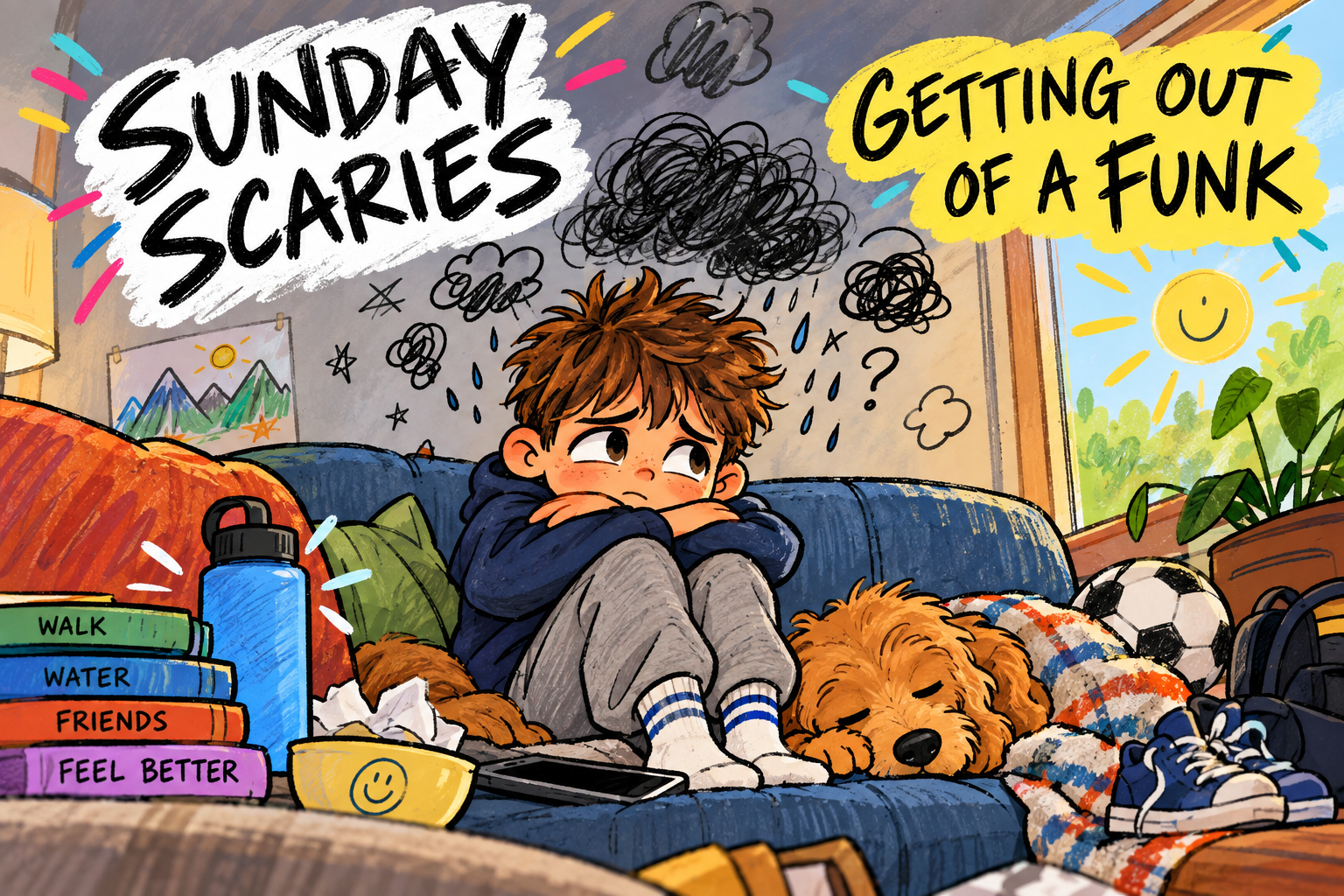
Getting Out of a Funk
I was in a funk the other day. Not like anything huge had happened, and I couldn’t really point to one specific thing that was wrong. I just felt off. I was in my head, kind of down, kind of irritated, and I knew I was there but couldn’t seem to shake it.
I think that’s one of the weird things about funks. Sometimes you know exactly why you’re in one. You had a bad day, something happened with a friend, school is stressful, work is stressful, you didn’t sleep, whatever. Other times it’s just this collection of little things that builds up until suddenly you don’t really feel like yourself.
For me, one of the first things I notice is that I start pulling inward. I think more. I talk less. Things that normally don’t bother me suddenly feel heavier. I can get stuck replaying the same stuff in my head, and even when I know that’s what I’m doing, it doesn’t always mean I can just stop.
So I tried some of the obvious stuff. I went for a walk. I drank some water. I tried getting out of the house and moving around a little bit. All good things, and probably things I needed to do anyway, but I was still kind of in it.
And I actually think that’s important. Sometimes we make coping skills sound like they’re supposed to immediately fix how you feel. Go for a walk and boom, better. Take some deep breaths and now everything is fine. That’s not really how it works. Sometimes the walk helps 5%. Sometimes drinking some water helps 2%. Sometimes you do all the healthy stuff and still feel crummy for a while.
Later, one of my older mentors stopped by. She could tell I wasn’t quite myself and said some really kind things to me. Nothing dramatic. She didn’t solve anything. She just knew me well enough to remind me of some things I probably needed to hear at that moment. Then I got a really great hug from her daughter, which definitely didn’t hurt.
That was probably the first time all day I felt myself come out of it a little bit.
I think there are two parts to getting out of a funk. The first is noticing that you’re in one. That sounds obvious, but it really isn’t. Sometimes you’ve been quieter, more annoyed, more tired, less interested in things, or spending way more time in your own head for a few days before you even realize what’s happening.
The second part is not expecting one thing to magically fix it. Maybe you need movement. Maybe you need food or sleep or water. Maybe you need to get off your phone. Maybe you need to do something you normally enjoy even if you don’t really feel like doing it. And sometimes you need another person.
That last one is probably the hardest because when I’m in a funk, reaching out is usually not the thing I want to do. I want to disappear into my own head and figure it out myself. But sometimes another person can see us a little more clearly than we can see ourselves in that moment.
So if you’re in a funk this week, maybe don’t make the goal “feel amazing.” Just notice it. Try one thing. Then another thing. Go for the walk. Drink the water. Get some sleep. Talk to somebody. Let someone be nice to you. Take the hug.
You don’t have to solve everything at once. Sometimes you just need to find the first little thing that helps you start feeling like yourself again.
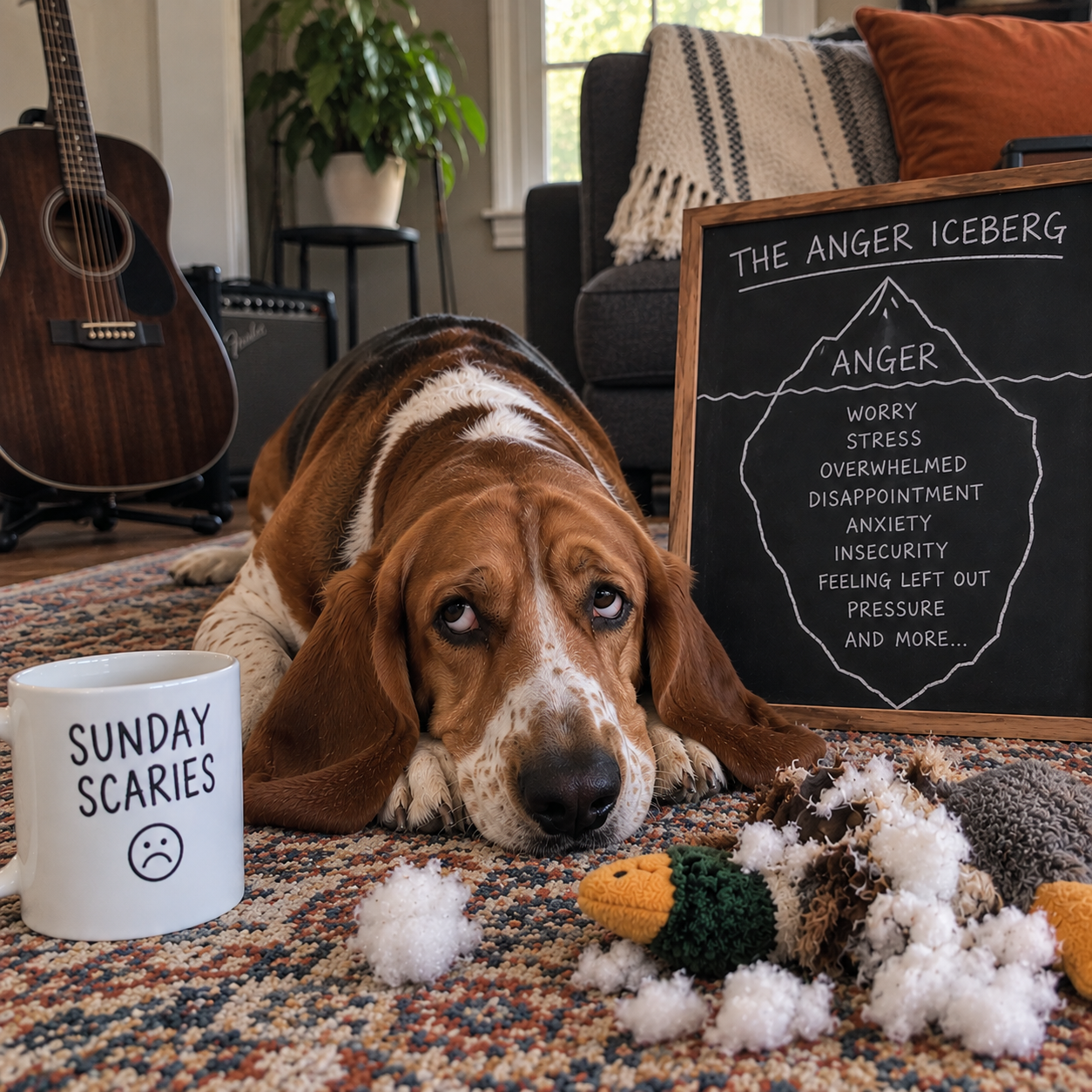
What’s Underneath the Anger?
For the last few weeks at school, I’ve been teaching fifth graders about anger. We started with anger thermometers, then talked about body clues, and this week we moved into anger icebergs: the idea that anger is often the part everyone sees, while underneath it might be worry, embarrassment, disappointment, sadness, fear, or feeling overwhelmed.
One student shared a great example. They talked about getting really mad at a sibling one morning because the sibling kept asking them for something while they were trying to get ready for school. At first, it sounded pretty simple: My sibling was annoying me, so I got mad.
But when we started looking underneath the iceberg, there was a lot more going on. They were worried about being late. They were thinking about what was happening at school that day. They felt rushed. And then there were all the other little worries that come with being an elementary school kid: friends, teachers, assignments, recess, fitting in, remembering everything you’re supposed to remember.
The sibling just happened to ask for something when the thermometer was already at about a seven.
There’s actually a reason anger can work like this. Anger can serve a protective function. When our brain perceives a threat, frustration, unfairness, or loss of control, our body prepares us to do something about it. Our heart rate can increase, our muscles tense, and our attention narrows toward whatever seems to be the problem. Anger gives us energy to act.
That can be incredibly useful. It’s also why the person asking you a completely innocent question at the wrong time can suddenly feel like Public Enemy No. 1.
And that’s why we spent time learning body clues before we ever got to the iceberg. Our bodies can tell us the temperature is rising before we understand what’s underneath it. Maybe your jaw tightens. Maybe your stomach feels weird. Maybe you start talking faster or louder. Maybe you get really quiet. Learning your own clues gives you a chance to catch yourself before the anger takes over the whole story.
The goal isn’t to get rid of anger. Anger is normal, and sometimes it’s telling us something important. The goal is to get a little better at understanding what it’s trying to protect.
So, homework for this week: the next time you notice yourself getting irritated, check your thermometer. Notice what your body is doing. Then take a look underneath the iceberg and ask yourself: What else am I feeling right now? What was happening before I got angry?
Maybe you really are just mad.
But maybe your sibling, partner, coworker, friend, or random person driving 12 miles under the speed limit—is just standing in front of something much bigger.
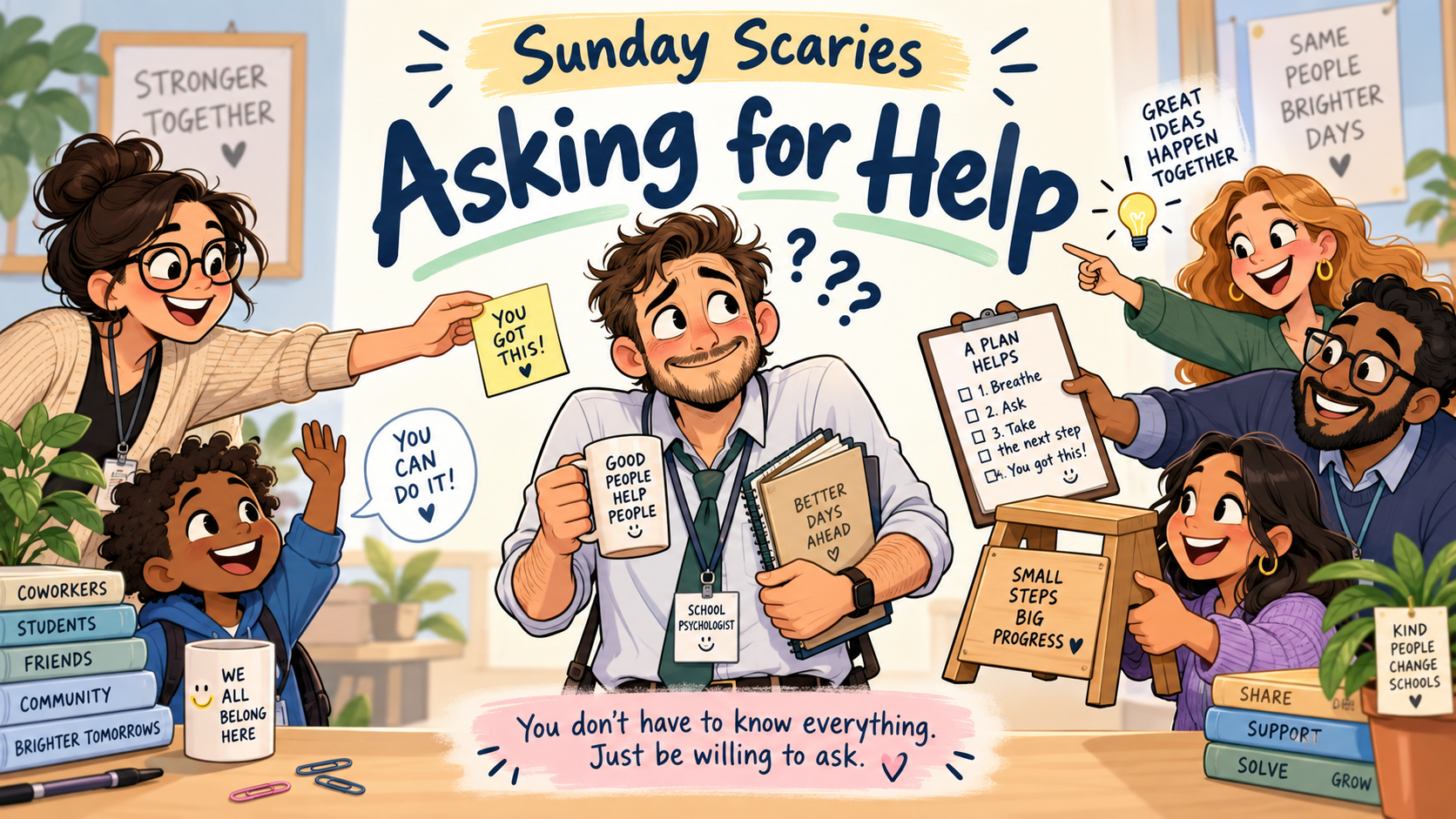
Asking for Help is OK!
I work with a lot of different people, kids, adults, interns, coworkers, students—and one thing I’ve noticed is that we are all pretty good at pretending we know what we’re doing.
There’s something difficult about admitting that we don’t know something. Maybe we’re embarrassed. Maybe we think people will see us as less capable or less intelligent. Maybe we’ve convinced ourselves that we should be able to figure it out on our own. So instead of asking for help, we struggle, make mistakes, waste a bunch of time, and occasionally make things way harder than they ever needed to be.
I learned this lesson while trying to fix something electrical at my house. I didn’t really know what I was doing, but instead of calling someone who did, I kept messing with it. I tried things. I got frustrated. I made mistakes. I even shocked myself, which probably should have been a pretty strong indication that perhaps I was no longer qualified for the job.
Eventually, I called a friend and asked for help. She showed me what I was doing wrong, explained what I needed to do, and we figured it out in about five minutes. Five minutes! I had probably spent twenty times that long trying to fake my way through it because that was easier than saying, “Hey, I don’t know how to do this.”
The funny thing is, research suggests that asking for help is actually an important part of learning. When we ask someone to explain something, show us what we’re missing, or help us work through a problem, we aren’t avoiding learning—we’re doing it. We also tend to underestimate how willing other people are to help us. That person you’re worried about bothering might actually be perfectly happy that you asked.
Of course, asking for help doesn’t mean handing somebody your problem and saying, “You do it.” Sometimes it’s simply saying, “Can you show me?” or “I’m stuck here. What am I missing?” The goal isn’t to have someone else do the hard thing for you. It’s to learn enough that maybe next time, you can do a little more of it yourself.
And pretending we know what we’re doing can have real consequences. Sometimes we waste an hour. Sometimes we make a mistake at work or school. Sometimes we make a bad decision because we were too afraid to ask a question.
So maybe the better question isn’t, “Why don’t I know how to do this?” Maybe it’s, “Who can help me learn how to do this?” Not knowing something isn’t the problem. Staying stuck because we’re afraid to admit we don’t know is.
This week, if you’re confused, overwhelmed, stuck, or just have absolutely no idea what you’re doing, try saying it. Ask the question. Call the friend. Raise your hand. Because asking for help isn’t proof that you aren’t capable. Sometimes it’s one of the smartest things you can do.
You don’t have to know everything. You just have to be willing to ask.

What makes a friend?
A kid asked me recently how you make a friend, and then followed it up with an even better question… what even is a friend? I gave him an answer at the time, but I’ve thought about it a few times since because it’s actually a pretty good question. We spend our entire lives making friends, losing friends, finding new ones, and trying to keep up with old ones, but I’m not sure how often we stop and think about what actually makes someone a friend.
As an adult, I think about the people I consider my friends and a lot of it is pretty simple. We go out to eat, watch sports, go to movies or concerts, play music, or just do the things we both like doing. Sometimes we talk on the phone, although that feels like it happens WAY less than it used to. But ultimately, I think a friend is someone who is there for you. They’re there when something really cool happens and you can’t wait to tell someone, but they’re also there when things are hard and you need somebody in your corner.
I also think we learn as we get older that there are all kinds of friends. As a kid, there’s so much emphasis on having a “best friend,” like we’re all supposed to choose one person and hand them the trophy. But life doesn’t really work that way. There are work friends, school friends, sports friends, friends you tell everything to, and friends you mostly just have a really good time with. There are also friends who are only around for a season. Sometimes nobody did anything wrong and nobody had some giant falling out… life just changed. Someone can be really important during one part of your life and not be part of the next one, and that doesn’t make the friendship any less real.
So how do you actually make a friend? I think you just have to put yourself out there a little bit. Say hi. Sit next to somebody. Ask a question. Invite someone to do something. Sometimes it’s awkward, and sometimes the other person doesn’t choose you back. That part isn’t particularly fun whether you’re 10 or 37. But most friendships probably started because one person made a tiny effort and the other person made one back.
Keeping friends might actually be harder. Life gets busy, especially as adults, and it’s easy to assume the people we care about know we care about them. Send the text anyway. Make the plan. Remember the thing they told you about. Celebrate the good stuff with them and show up for the hard stuff. Friendship doesn’t have to mean talking every day, but I do think it means continuing to make space for each other.
Maybe that’s the answer I should have given the kid. A friend is someone you enjoy being around, but it’s also someone who makes you feel like there’s a place for you in their life. You make a little effort, they make a little effort back, and over time you keep choosing each other.
Actually… maybe that’s pretty good advice for the adults too.
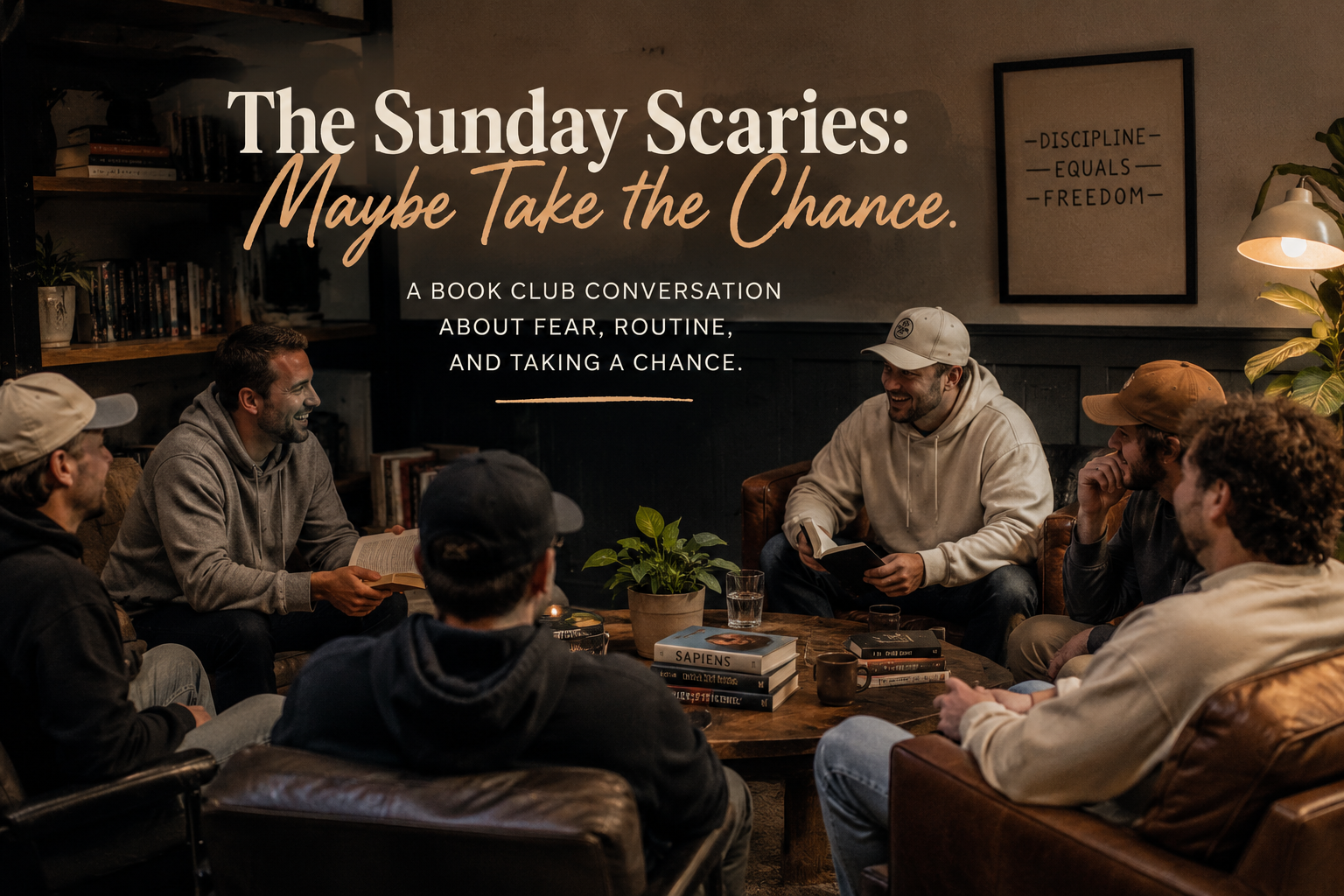
The Sunday Scaries: Maybe Take the Chance
I started going to a book club this month.
Which, honestly, is probably a small example of what I want to talk about this week. Going somewhere new, sitting in a room with people I didn’t really know, and then somehow ending up in a conversation about some of our deepest fears.
You know, casual book club stuff.
We talked about letting people down, looking stupid, failing, not being open enough, putting yourself out there and having it not work out. And as I sat there listening, I kept hearing a common theme underneath a lot of it: taking a chance is freaking hard.
Because the alternative is really, really comfortable.
There is a reason we stay in our comfort zones. They work. We know what happens there. We know the routine, we know the people, and we know what we are good at. Maybe more importantly, we know how to avoid the things we aren't good at. It’s the path of least resistance, and honestly, there is something pretty nice about that.
And I don't even think comfort is necessarily a bad thing. Routine can be good. I love a routine. There is something great about knowing what your day looks like and feeling like you have some control over it. But I think the problem comes when comfortable quietly turns into stuck, and we don't even really notice it happening.
Sitting in that room of strangers talking about fear, I started thinking about what it actually means to face one. I think sometimes we picture facing a fear as this giant, dramatic moment where we suddenly decide we aren't scared anymore. Quit the job. Get on the plane. Tell the person how you feel. Sign up for the thing. Jump straight into the deep end and hope you figure out how to swim.
But maybe it doesn't have to work like that.
Maybe facing something you're afraid of is a lot more boring than that. Maybe you just put your feet in the water for a while. Then next time you go a little deeper. You don't have to cannonball into the damn pool just because you finally decided you wanted to get in.
I think that's where taking chances can feel a little more manageable. It doesn't have to mean blowing up your entire life or becoming some wildly adventurous new version of yourself overnight. It might just mean sending an email you've been thinking about, going somewhere by yourself, trying something you've always wondered about, saying yes when your first instinct is to come up with an excuse, or finally having a conversation you've been avoiding.
And sure, some of those things might not work out. You might look a little silly. Someone might say no. You might try something new and discover that you absolutely freaking hate it. But that's also kind of the deal, right? If we want the possibility of something new happening, we have to accept at least a little bit of the possibility that it doesn't go the way we hoped.
The funny thing is, I don't think most of us need to completely reinvent our lives. We probably just need to get a little more comfortable being uncomfortable every once in a while. Because every time we do something that scares us a little bit and survive it—which, spoiler alert, we usually do—the scary thing gets just a tiny bit smaller.
So that's the homework this week. Think about something you've been avoiding, putting off, or talking yourself out of simply because it feels uncomfortable. You don't have to conquer it this week, and you definitely don't need to jump into the deep end. Just ask yourself what putting your feet in the water would look like.
Maybe it's sending the text. Maybe it's showing up somewhere new. Maybe it's asking the question, signing up for something, or finally telling somebody what you've been thinking. Whatever it is, make it small enough that you can actually do it.
Because your comfort zone isn't the enemy. It's comfortable for a reason, and sometimes it's a pretty great place to be. I just don't know if we're supposed to spend all of our time there.
So this week, maybe wander a few steps outside of it and see what happens.
You can always come back.
But you might find something out there worth staying for.
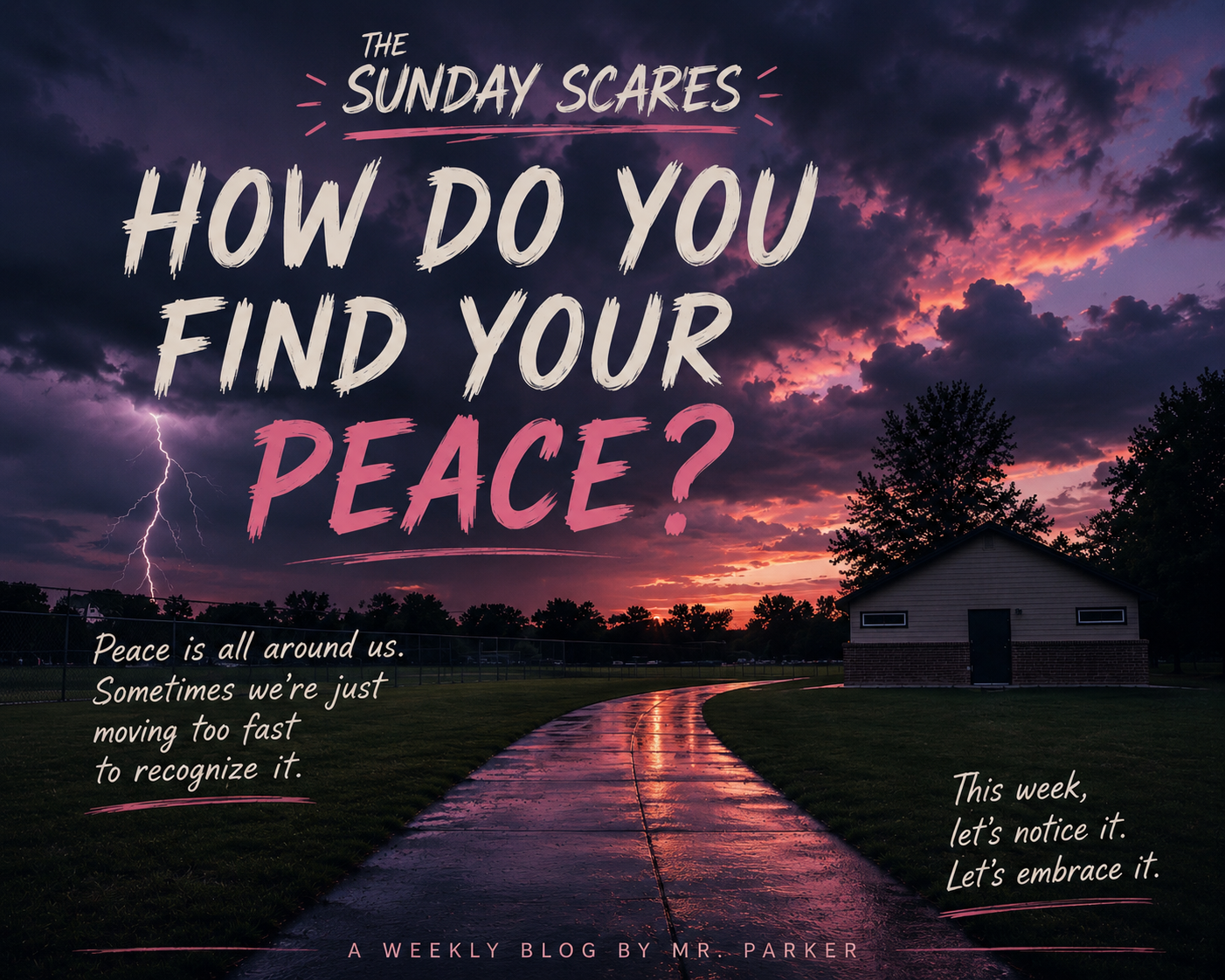
How Do You Find Your Peace?
This week, I woke up at 5:00 a.m. to go for a walk, a practice I’ve been trying to add to my days since returning to school. This particular morning was different. There was a lightning storm in the distance, and I found myself completely in awe watching the sky light up while everything around me was still dark and quiet.
Then it started pouring. For about 45 seconds, the rain came down HARD, and admittedly, I was a little annoyed. Here I was, awake at 5:00 in the morning trying to do something healthy and peaceful, and now I was soaking wet. But almost as quickly as it started, it stopped, and the storm gave way to an incredible sunrise filled with pinks and reds. Somewhere in the middle of all of it, I found myself hysterically laughing. How amazing is it to be awake, basically dancing through a rainstorm, and watching another day begin?
Life can be a lot of things. It can be stressful, sad, overwhelming, busy, exciting, lonely, full, or sometimes strangely empty. We’re really good at noticing all of those things, especially the difficult ones. But peaceful? Peace seems to be one of those things that gets pushed aside.
I think part of the problem is that we expect peace to be bigger than it actually is. We imagine a vacation, an empty calendar, a weekend in the mountains, or some magical day where nobody needs anything from us. But maybe peace isn’t the absence of stress, responsibility, or difficult things. Maybe it’s just the little moments we find in the middle of them.
What brings you peace? Is it a late-night concert on a school night with your partner? Sitting outside watching the bugs, stars, sunsets, or people having fun? Walking your dog? Playing music? Spending time with the people you care about most? Peace can feel so difficult to find, yet somehow it’s also all around us. Sometimes we’re just moving too fast to recognize it.
Your Peace Homework
This week, find one peaceful moment every day. You don’t have to change anything about your routine or go searching for some perfect moment. Just notice it when it happens. Stay there for a few extra seconds and actually take it in.
Life is going to keep being stressful, weird, beautiful, frustrating, funny, and hard—sometimes all within about 45 seconds.
But peace is there too.
This week, let’s make sure we notice it.

Sunday Scaries: A Box of Assorted Feelings
As I head into year 14 as a school psychologist, and year 10 at the same school, I feel a little bit like one of those Valentine’s boxes of assorted chocolates.
Except instead of chocolates, it’s feelings.
I’m excited. Excited to meet new kids, reconnect with the ones I already know, try new things, and take on whatever challenges come my way.
I’m also nervous. Who wouldn’t be?
Even though I’ve been doing this for twice as many Super Bowls as Tom Brady has won, there’s still some self-doubt that sneaks in before the first day.
What if I mess up? What if my lessons aren’t good? What if I’m not as good at this as I used to be?
And underneath all of that, I’m happy to be back. I get to run around at recess, spend my days with some pretty amazing kids and coworkers, and be a sounding board when someone needs to talk about the hard stuff, or just whatever weird thing happened that day.
It’s a pretty full box of chocolates.
Where Did Summer Go?
Every year around this time, I do the same thing.
First, I grieve summer.
Where did it go? How is it already over? What did I even do?!
Then I actually stop and think about it.
Oh yeah.
I traveled. I spent time with friends and family. I played music. I had some great days. I had some hard days. I had moments I wish I could go back to and others I’m perfectly fine leaving behind.
Because summer doesn’t magically exempt us from being human.
Life still has its ups and downs whether we’re working or not. The difference is that summer can give us a little more room to move through them.
Then school starts again and suddenly the calendar fills up. The alarms come back. Our days become much more structured.
There’s something comforting about that. I know where I’m supposed to be. I know what my day generally looks like.
But structure doesn’t mean certainty.
There are still going to be surprises. There will be great days and days when absolutely nothing goes according to plan.
So instead of wishing summer could last forever, I’ve been thinking about a different question:
What parts of summer can I bring with me?
Bring Some of It With You
When life was less structured this summer, what actually helped?
For me, I made time for things I enjoyed. I got outside. I traveled. I played music. I spent time with people I care about. And sometimes I did absolutely nothing without trying to turn it into something productive.
Why do those things suddenly become optional when we’re busy?
We talk a lot about wanting to “be more present,” but that’s a pretty vague goal. So this year, I’m trying to make it more concrete.
Keep something fun on the calendar. It doesn’t need to be a vacation. Give yourself something to look forward to.
Get outside. Walk, run, sit in the grass, throw a ball around. Just get out of the building for a little while.
Protect your people. Busy schedules have a funny way of pushing relationships to the bottom of the list.
Let rest actually be rest. You don’t have to optimize every free second.
Notice the good moments while they’re happening. Not six months later when you’re looking through pictures wishing you could go back.
The things that recharge us don’t need to disappear just because the calendar says August.
Another Sunday Scary
School is a lot of things.
It can be challenging, stressful and, yes, a little scary.
But that’s not the whole story.
School is seeing your friends again. It’s having adults in your life who care about you. It’s discovering something you’re good at. It’s learning something you didn’t know yesterday. It’s struggling with something, trying again, and realizing you can do hard things.
And maybe that’s what I need to remember heading into year 14.
I don’t need to have the entire year figured out on the first day.
Neither do you.
So as another summer ends and another school year begins, here’s this week’s Sunday Scary:
What is one thing from your summer that helped you feel like yourself, and how can you make sure you don’t lose it when life gets busy again?
Summer has to end.
The good parts don’t have to.
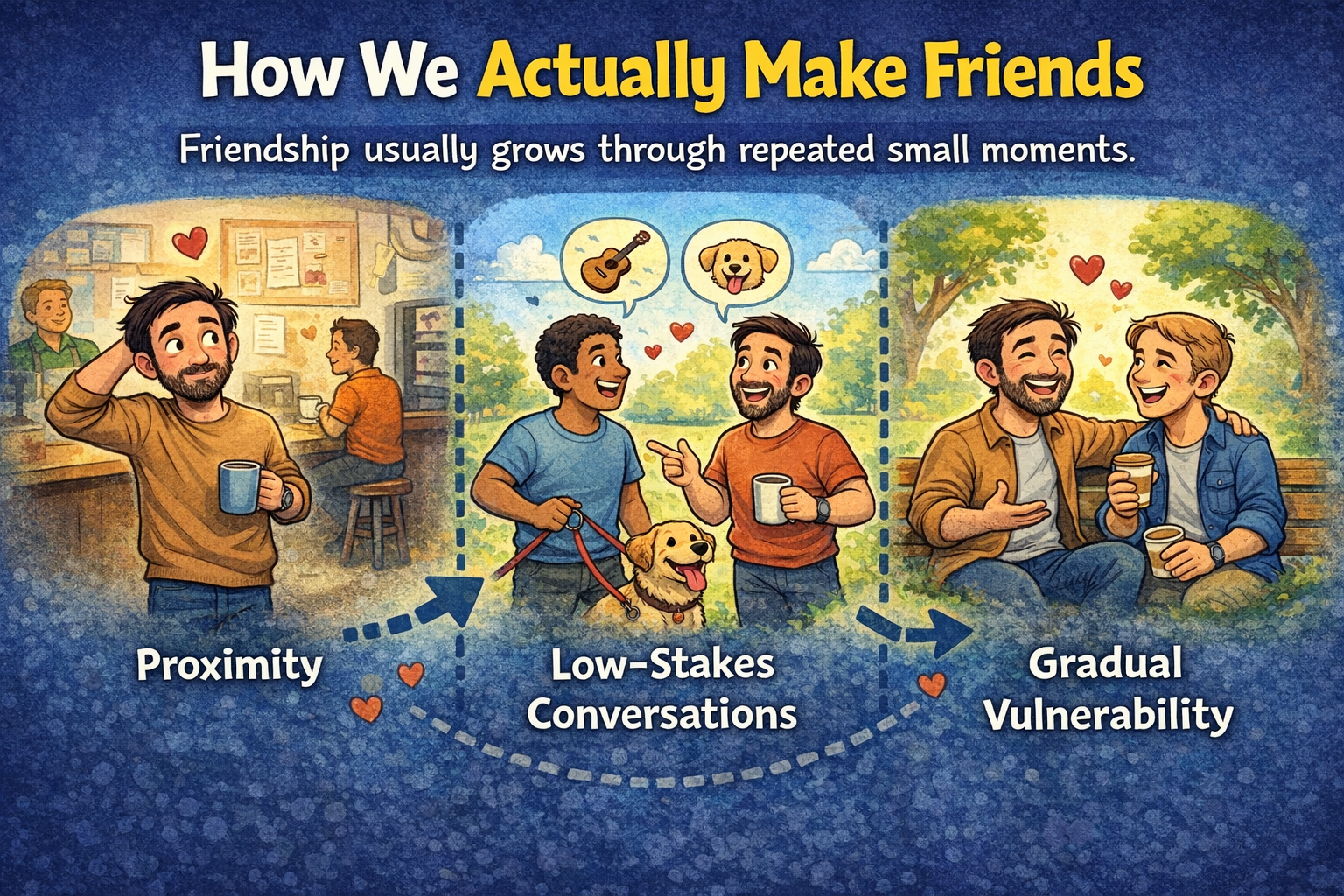
How We Actually Make Friends
It’s not charisma. It’s something much simpler.
People often think friendship happens through some kind of natural social magic.
Like some people just have it.
They’re funny.
Outgoing.
Effortlessly social.
And the rest of us are left wondering how it works.
But most friendships don’t actually form that way.
They form through something much simpler.
Repeated small moments.
Most friendships begin with three ingredients.
1. Proximity
We become friends with people we simply see often.
Classmates.
Coworkers.
Neighbors.
People at the gym.
Parents standing next to us at a soccer game.
Psychologists call this the propinquity effect.
But really it just means this:
Friendship grows where life overlaps.
The more often two people share space, the more chances they have for small interactions.
And small interactions are where friendships start.
2. Low-stakes conversations
Friendships rarely begin with deep conversations.
They begin with things like:
“Cold today.”
“Did you see that game?”
“Your dog is really friendly.”
These small conversations might seem meaningless.
But they do something important.
They signal safety.
They tell the other person:
This is someone easy to talk to.
Over time those tiny conversations slowly become longer ones.
3. Gradual vulnerability
Eventually something shifts.
Someone shares a little more.
Maybe a small frustration.
A story about their weekend.
Something personal but not too personal.
The other person shares something back.
And little by little, trust grows.
Friendship doesn’t appear all at once.
It builds in layers.
The mistake people make
A lot of adults struggle with making friends for one simple reason.
They think friendship requires effortful social performance.
But friendship actually grows from something much quieter.
Showing up repeatedly.
Same coffee shop.
Same climbing gym.
Same running group.
Same neighborhood walk.
When people see each other often enough, familiarity slowly turns into connection.
And connection slowly turns into friendship.
The surprising truth
Most friendships don’t start with chemistry.
They start with consistency.
Which means if you’re hoping to make friends, the question isn’t:
“How do I become more interesting?”
The better question is:
“Where can I show up regularly around the same people?”
Because friendship usually grows from shared space and small conversations, not social brilliance.
And once you know that, making friends becomes much less mysterious.
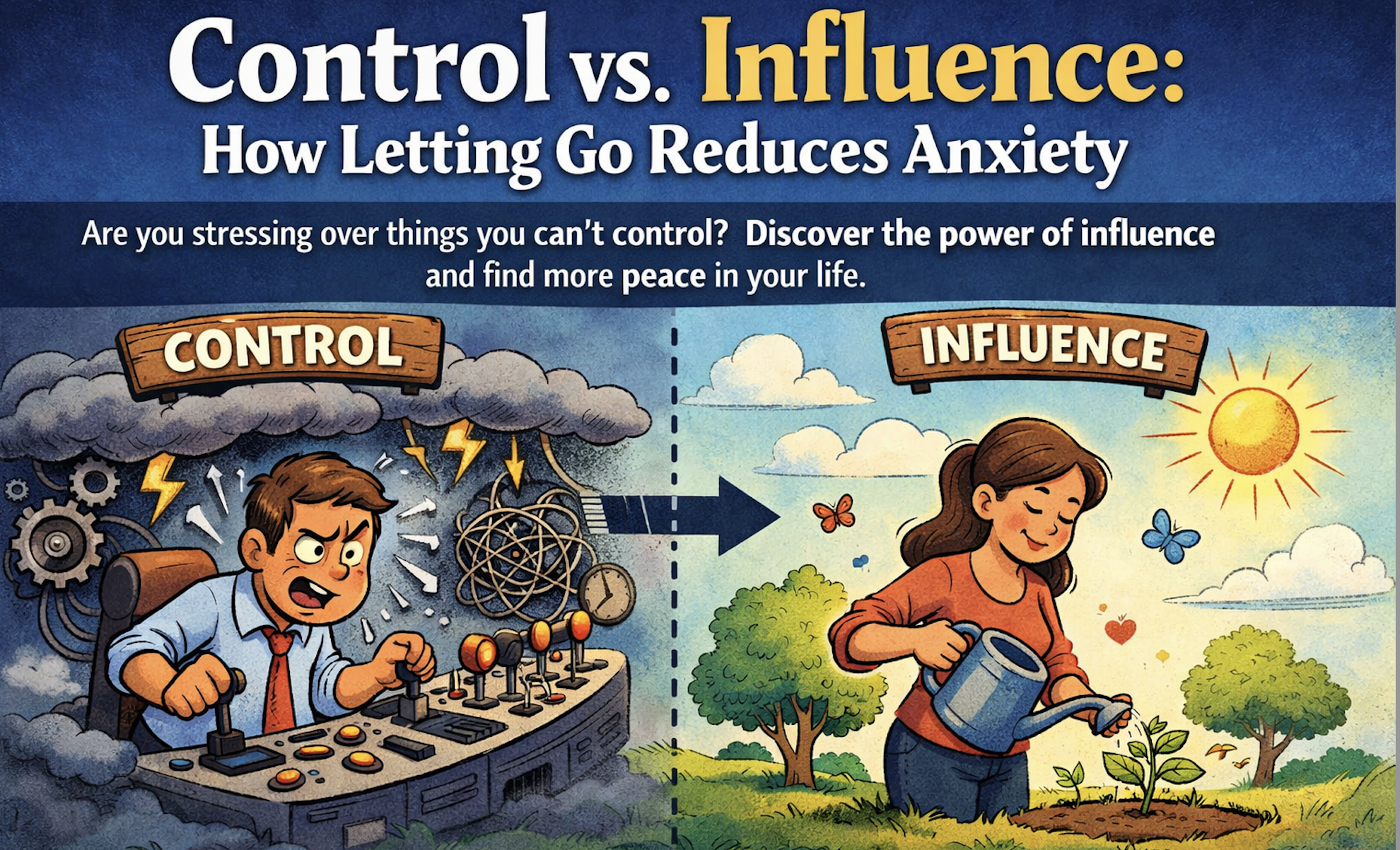
Control vs. Influence
Why trying to control everything might be the thing making you anxious
There’s a quiet trap most of us fall into without noticing.
We start trying to control things that were never actually ours to control.
Other people’s reactions.
How quickly a problem resolves.
Whether someone understands us.
How an event turns out.
Whether our plans go exactly right.
The strange part is that the more we try to control those things, the more anxious we become.
Because deep down we know something our brains don’t want to admit:
Control is mostly an illusion.
Very little in life is truly under our control.
Weather.
Traffic.
Other people’s feelings.
How a conversation lands.
Whether someone changes their mind.
But there is something else available to us.
Something much quieter.
Influence.
Influence is different.
Influence says:
I can’t control the outcome…
but I can shape the conditions.
A teacher can’t control whether a student tries hard in class.
But they can create a room where trying feels safe.
A parent can’t control whether their child makes the perfect choice.
But they can influence the kind of person their child becomes.
A musician can’t control whether a crowd loves a song.
But they can influence the moment by showing up fully and playing it well.
Influence works slowly.
Control tries to work immediately.
That’s why control fuels anxiety.
When we believe we must control the outcome, every uncertainty feels dangerous.
But when we shift to influence, the pressure changes.
Instead of:
“I have to make this go perfectly.”
It becomes:
“What small thing can I do to move this in a better direction?”
Influence is lighter.
It leaves room for other people’s freedom.
It leaves room for mistakes.
It leaves room for life to unfold.
Ironically, people who stop trying to control everything often end up having more real impact.
Because people don’t respond well to control.
But they respond to presence, patience, and consistency.
And that’s where influence lives.
So the next time anxiety creeps in, it might be worth asking one simple question:
Am I trying to control this…
or
am I trying to influence it?
One of those will exhaust you.
The other one will set you free.
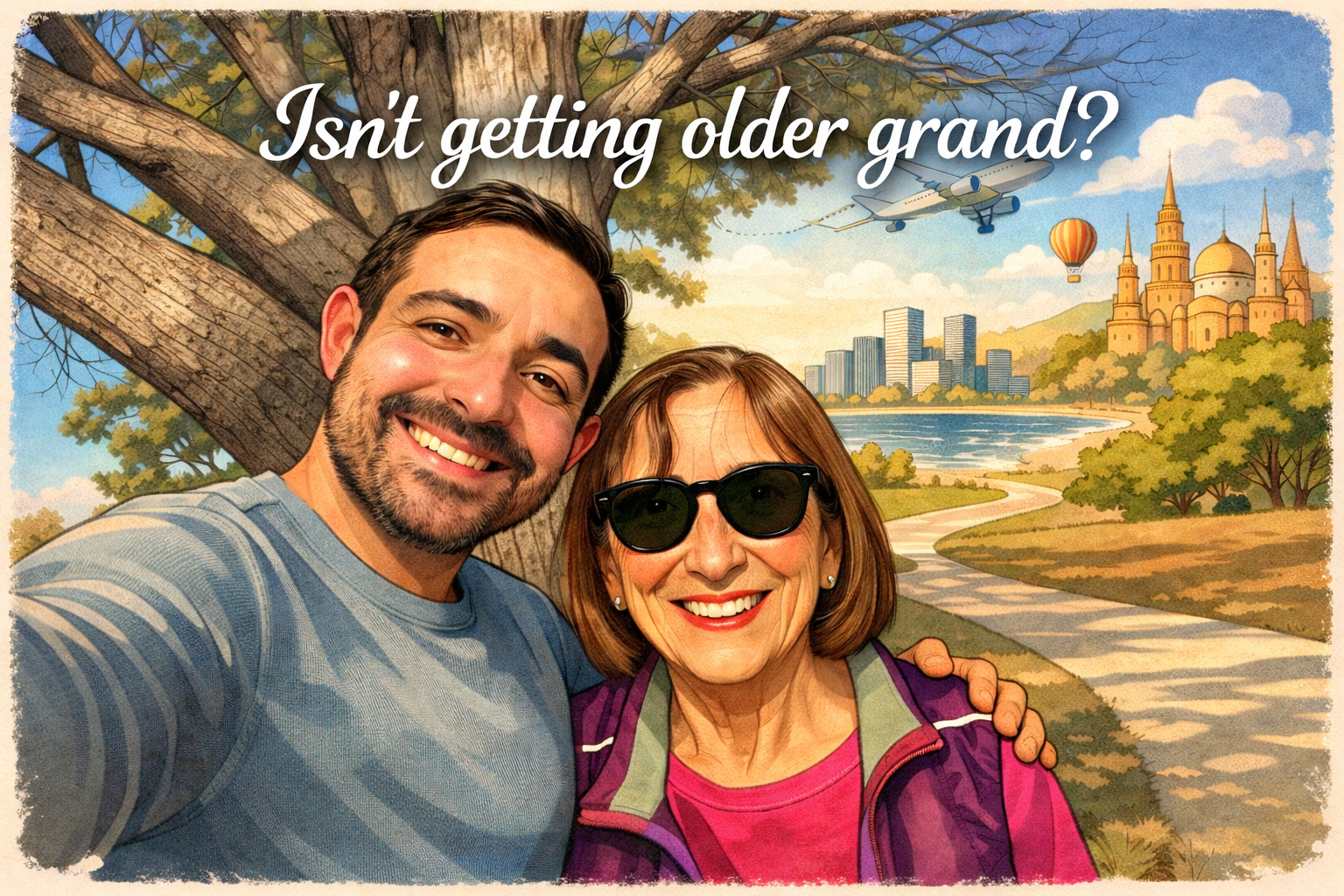
Isn’t getting older grand?
A child I work with recently told me they’re scared to get older.
They talked about bigger expectations. More responsibility. Harder days.
They worried that something important might disappear—that being older would mean less fun, less safety, less magic.
It wasn’t dramatic. It was honest.
And sitting there with them, I realized how often we talk about getting older like it’s something to brace for instead of something to step into.
We warn kids about it.
We joke about it as adults.
We measure it in losses more than gains.
But the truth is, getting older isn’t just about what gets heavier.
It’s also about what gets wider.
What We’re Afraid Of When We Think About Getting Older
The fear makes sense.
Getting older does come with more responsibility.
More decisions.
More moments where no one swoops in to fix things for you.
For kids, that can feel like the end of something precious.
For adults, it can feel like a narrowing—fewer options, fewer chances, fewer firsts.
We don’t lie when we acknowledge that weight.
But we miss something important when we stop there.
What Actually Grows With Age
What we don’t talk about enough is how much capacity grows as we age.
You gain skills you couldn’t have accessed earlier:
Emotional regulation
Perspective
Knowing when to push and when to rest
Knowing what matters and what doesn’t deserve your energy
These skills don’t arrive all at once.
They stack quietly, year after year, often unnoticed until you need them.
You also gain new freedoms:
Choosing your people
Choosing your pace
Choosing how much you explain
Choosing what you no longer carry
Getting older doesn’t mean you lose agency.
It often means you finally get to use it.
Three Generations, One Moment
This all hit me in the same week I was talking with that child.
I’m getting another year older next week.
Not in a dramatic way—just one of those birthdays that sneaks up on you.
At the same time, I’m planning a summer trip with my 78-year-old mom.
We’re traveling to foreign countries together—new streets, new languages, unfamiliar places.
Watching her plan that trip is a quiet reminder of something powerful:
getting older doesn’t mean you stop exploring.
It often means you explore with more confidence, more curiosity, and fewer apologies.
In one week, I’m holding:
A child afraid of growing up
My own reflection on aging
And a parent who is still expanding her world
That doesn’t feel like decline.
It feels like continuity.
A Better Way to Think About “Older”
Getting older doesn’t mean the door closes.
It means the map gets bigger.
Each year adds tools you didn’t have before.
Each year gives you more choice about how you move through the world.
Yes, the stakes change.
Yes, responsibility increases.
But so does your ability to meet what’s in front of you.
What I Told the Child (and What I Tell Myself)
I didn’t tell my client not to be scared.
I told them that every year comes with new tools they don’t have yet—and that they won’t be alone when those years arrive.
And I think that’s the part worth holding onto.
The excitement of getting older isn’t loud.
It doesn’t announce itself.
It shows up quietly—in new skills, new freedoms, and the growing realization that you’re more capable than you once were.
That doesn’t mean life gets easier.
It means you get stronger at living it.
And honestly?
That’s something to look forward to.
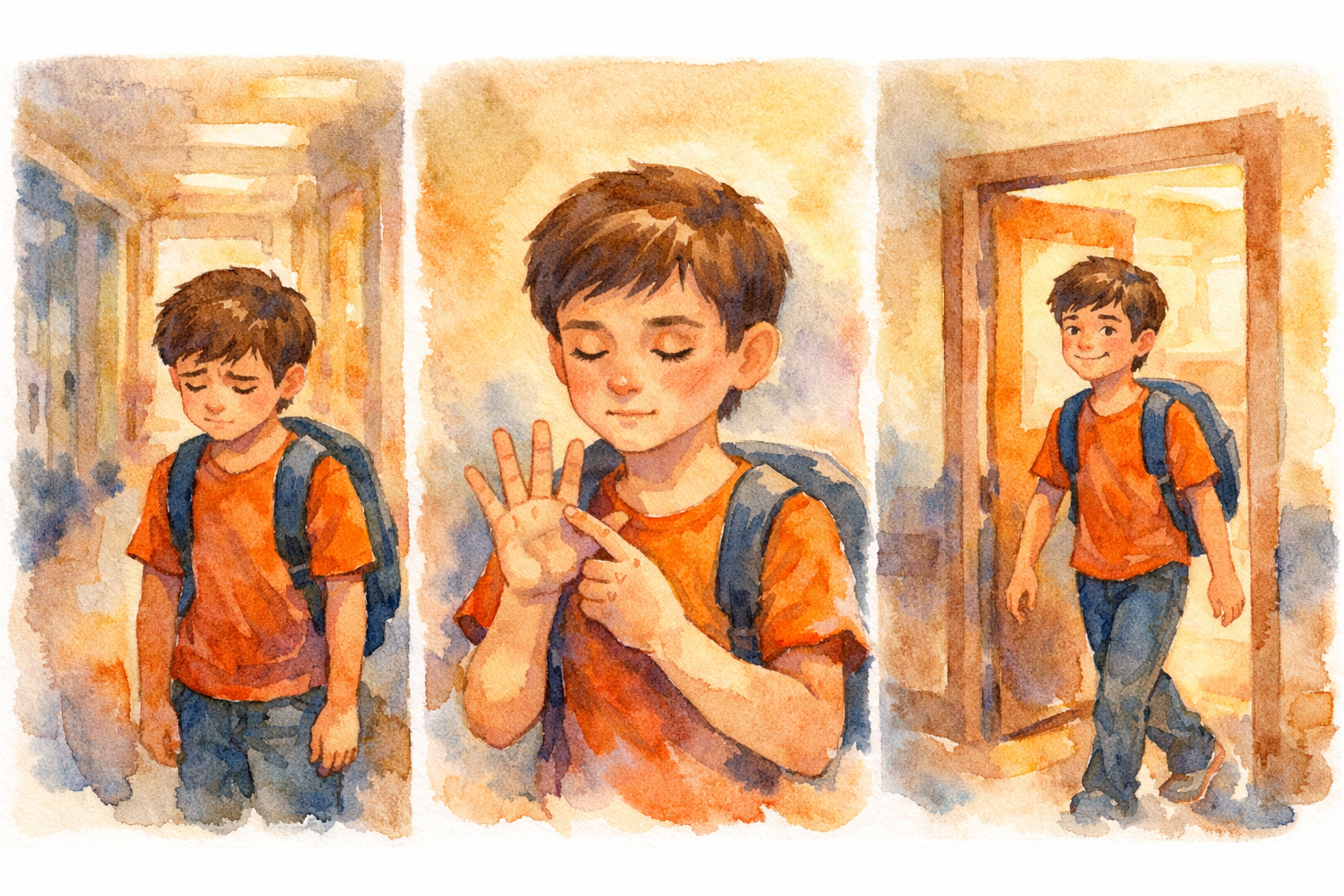
What to Do When Your Feelings Are Too Big for Your Body Written for kids — and the grown-ups who care about them.
Have you ever felt like your body was suddenly a volcano?
Your heart beats fast.
Your throat feels tight.
Your hands squeeze — or maybe you want to yell, hide, or cry…
even when nothing huge happened on the outside.
I saw this just the other night.
I was at a friend’s house.
Adults were talking in the kitchen — loud laughter, clanking dishes — and I noticed their child slip quietly into the hallway and sit on the floor.
No one else saw it — but I did.
Their knees were pulled in tight.
Eyes glued to one spot on the wall.
Shoulders shaking a little.
Nothing “bad” had happened.
No one was upset with them.
And yet — their body looked full — full of a feeling that was too big to hold alone.
When I sat down nearby and asked softly what it felt like, they whispered:
“It’s like my body is panicking even though I’m not.”
And honestly?
That might be one of the smartest explanations I’ve ever heard.
🧠 Why Big Feelings Happen (Brain Science — Kid Language)
Inside your brain is a little alarm system called the amygdala.
Its job? Keep you safe.
When it thinks something might be scary or too much, it sends signals:
🚨 fast heartbeat
🚨 tight chest
🚨 urge to run, freeze, yell, or hide
Sometimes the alarm is right.
Sometimes it goes off even when you’re actually safe — like when a room is too loud, you make a mistake, or you suddenly feel small around a crowd.
That doesn’t mean you’re “too sensitive.”
It means your brain is trying to help — but it needs tools to calm down and reset.
🎒 Tools You Can Use Anywhere
🎢 1️⃣ Roller-Coaster Breathing
Hold up your hand like a mountain range.
⬆️ Slide up a finger – breathe in
⬇️ Slide down the finger – breathe out
Do it slowly.
Your brain hears:
“We’re okay.”
✏️ 2️⃣ Draw the Feeling Outside of You
Grab a pencil or the back of a napkin.
Draw what the feeling looks like.
A storm?
A scribble?
Something spiky or tiny?
Once it’s on paper, you can look at it instead of feeling trapped inside it.
❄️ 3️⃣ The Cold Switch
Cold things help your body calm faster than words sometimes.
Try:
• holding a cold water bottle
• ice cube between your fingers
• splash of water on cheeks
Your nervous system goes from:
“ALERT!” → “We’re safe.”
🗣️ 4️⃣ Say This Sentence
“This feeling is big — but I am bigger.”
Say it softly.
Say it in your mind.
Say it until you feel even a tiny shift.
🌱 A Story Ending — and a Beginning
Back in that hallway at my friend’s house —
the child tried roller-coaster breathing.
They didn’t speak.
They just traced their fingers… slow.
And after a minute, their body softened.
They stood up, walked back into the living room, and rejoined the world — not because the feeling disappeared…
but because they remembered they weren’t stuck.
Big feelings don’t make you weak.
Knowing what to do with them makes you powerful.
🧡 Try This Together (Kids + Adults)
Next time a feeling fills your whole body, you can both try:
Hand on chest.
Slow breath.
And a whisper:
“I’m allowed to feel this. And I can help myself through it.”
That’s strength.
And that’s growing.
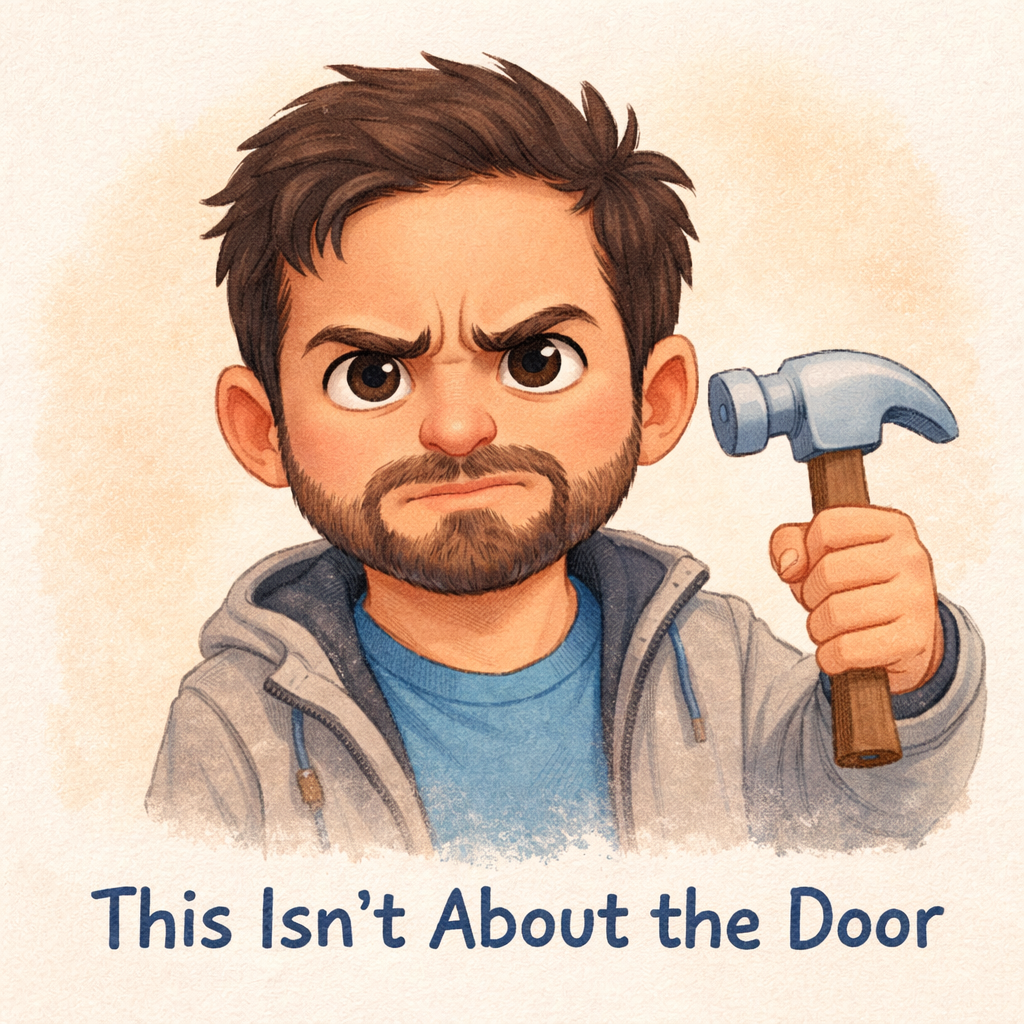
Permission to Mourn the Things We’re “Supposed” to Be Over
It’s not the door…
The other day I couldn’t do a very basic handyman task.
Nothing dramatic. A door. A bracket. A nail.
Something that, in my head, should have been easy.
Instead, I lost it.
I was smashing the door with a hammer.
I was yelling.
I was furious — not just annoyed, but that hot, tunnel-vision kind of rage where everything else disappears.
And at some point, I caught myself and thought:
This feels bigger than a door.
So I stopped.
And I asked myself why.
What surprised me wasn’t how quickly the answer came — it was what the answer was.
I realized I wasn’t really mad at the door.
I was mad at my dad.
Mad that he didn’t teach me how to do this.
Mad that he wasn’t there.
Mad that I still feel that absence in moments where it “shouldn’t” matter anymore.
That part stopped me cold.
On paper, this grief doesn’t make sense.
I’m an adult.
I’m capable.
I’ve built a good life.
And yet — there it was.
Why We Need Permission to Mourn the “Old Stuff”
We don’t often give ourselves permission to mourn things that feel outdated or socially awkward to grieve.
We’re supposed to be past them.
We’re supposed to have moved on.
But grief doesn’t care about timelines or logic.
Sometimes it hides in a doorframe.
Sometimes it comes out sideways as rage.
Sometimes it waits until you feel small, stuck, incompetent —
and then it shows up loud.
What I’ve learned (and keep relearning) is that anger is often a messenger.
It’s pointing to something that never got space.
Something that never got named.
When we don’t allow ourselves to mourn what should have been —
a parent who showed up, a skill we wish we had learned,
a version of ourselves that felt supported —
it leaks out anyway.
Usually at the worst possible time.
The Science (Why This Happens)
When we suddenly feel overwhelmed or incompetent, the brain often drops out of logical, problem-solving mode and into threat mode.
Our emotional brain takes over before we’ve had time to think.
Our brains are also incredible at association.
They link now with then.
A stuck screw isn’t just a stuck screw —
it taps into earlier experiences of feeling unsupported, alone, or expected to “figure it out.”
Research on emotional regulation shows:
Emotions that aren’t processed don’t disappear —
they get stored.
And later, when something familiar pokes them,
they come back as anger, shame, or sudden intensity.
This is emotional displacement —
the feelings belong to one situation…
but they show up in another.
Which means:
You’re not overreacting.
You’re reacting to something that never got acknowledged.
This Isn’t About Blame
This isn’t about rewriting the past or blaming parents.
It’s about honesty.
It’s about saying:
Yes — this still hurts.
Yes — this mattered.
Yes — I’m allowed to feel this… even now.
The door eventually got fixed.
The rage passed.
But the grief —
that needed a moment.
Maybe the permission we really need
is simply to notice it
when it shows up…
even if it shows up holding a hammer.
Homework (Gentle. Optional. Real-Life.)
If this resonates, here are small invitations — not fixes.
1️⃣ Name the “This Isn’t About the Door” Moment
Next time you feel a big reaction to a small problem, pause and ask:
What else might this be about?
You don’t need an answer.
Just ask.
2️⃣ Finish the Sentence
Say or write:
“I’m really upset about ___, but I think part of this is about ___.”
No judging. No editing.
3️⃣ A 60-Second Grief Window
Give the feeling one minute.
No solutions.
Just acknowledgment.
Grief often softens once it’s witnessed.
4️⃣ Remind Yourself
Say (out loud if you can):
“It makes sense that this showed up.”
Because most of the time —
it does.
Final Line
Sometimes mourning what should have been
is the most honest form of healing.
And sometimes…
that’s enough for now.
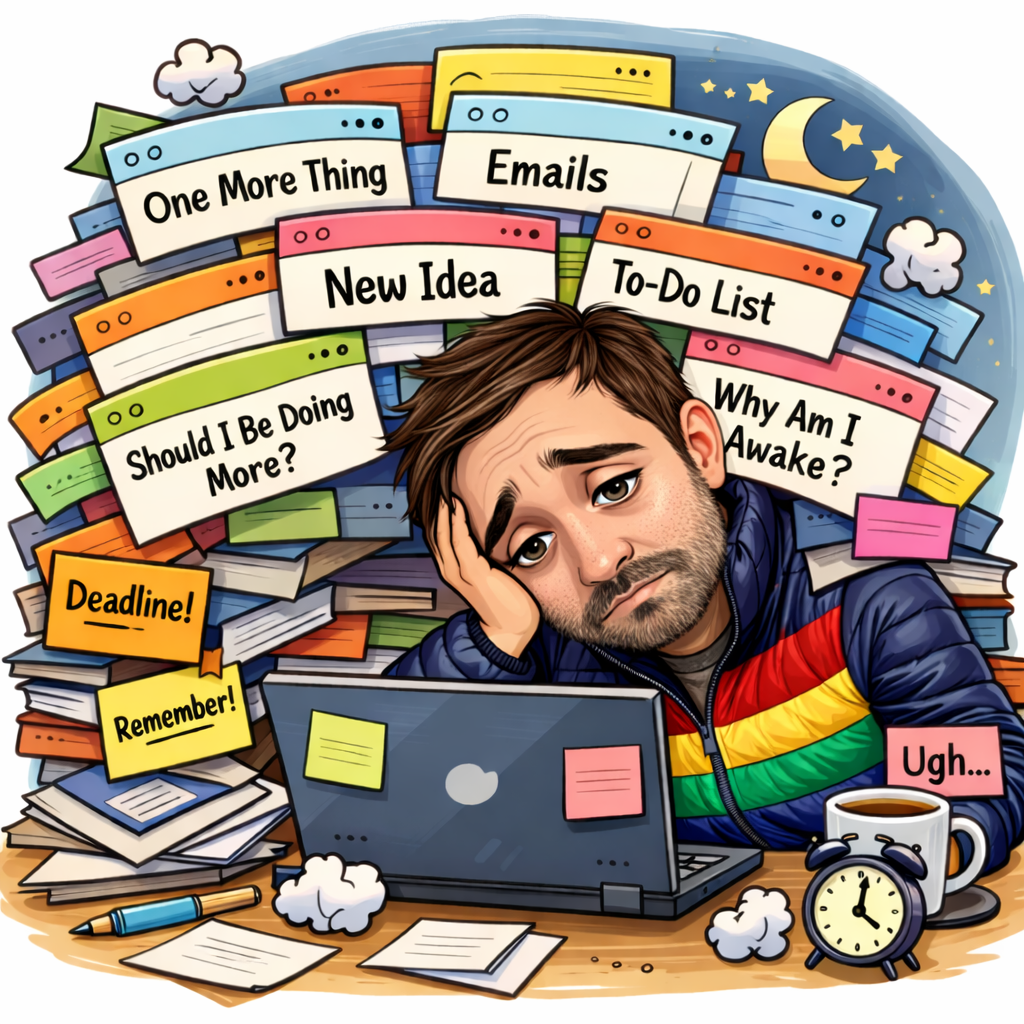
A Season of Fewer Tabs
A Season of Fewer Tabs
I’m bad at this.
Let’s just start there.
I am not naturally good at slowing down, doing less, or deciding that something is finished. My brain is always quietly… and loudly… asking:
“Okay… but what’s next?”
Even when things are good.
Especially when things are good.
And honestly? I see the same thing happening in schools all the time.
More programs.
More data.
More emails.
More interventions.
More enrichment.
More clubs.
More reminders to “just push through a little longer.”
Somewhere along the way, “doing enough” stopped feeling like enough.
The Tab Problem
Recently I realized my brain feels like my laptop when I have too many tabs open.
Nothing is technically broken —
but everything is slower.
A little glitchy.
Slightly overheating.
Constantly humming in the background.
That’s what happens when we keep adding… without ever closing.
And here’s the part I don’t love admitting:
I often confuse being busy with being responsible.
If I’m doing more → I must be trying hard.
If I’m tired → it must mean I care.
If I can’t sleep → it’s probably because I haven’t figured it all out yet.
Spoiler: that’s not how sleep works.
What This Does to Sleep
When we don’t give ourselves permission to stop,
our brain never gets the signal that it’s safe to power down.
So at night, instead of rest, we get:
Mental replay
To-do list reruns
Conversations that already happened
Conversations that might happen
A strong urge to solve everything at 11:47 PM
It’s not because we’re bad at sleeping.
It’s because our nervous system still thinks we’re… on.
The Science (Friendly Version)
There’s a reason we stay busy — and it’s not because we love exhaustion.
From a psychological lens:
Being busy gives us predictability
Productivity provides short-term relief
Constant motion keeps us from sitting with discomfort
Our brains are wired to avoid uncertainty.
Stillness removes distraction — which means we suddenly hear the thoughts we’ve been dodging:
Am I doing enough?
What if I disappoint someone?
What if I stop and realize I’m overwhelmed?
What if… I don’t like how this feels?
Busyness becomes a coping strategy —
a socially approved one.
And in schools, this shows up as:
Over-programming
Overscheduling
Adults modeling exhaustion as commitment
Kids learning early that rest is something you earn, not something you need
When Enough Is… Enough
The hard question is never:
“What else should we add?”
The harder one is:
“What could we stop doing and still be okay?”
Or even scarier:
“What if we stopped… and nothing bad happened?”
A season of fewer tabs doesn’t mean giving up.
It means choosing intentionally.
Capacity is not unlimited — for adults or kids.
Sometimes the healthiest move
is closing something gently and saying:
“This is enough for now.”
Homework (Gentle, I Promise)
1️⃣ The Tab Audit
Write down 5 things currently taking up mental space.
Ask:
• Does this still matter?
• Is this mine to carry?
• Could this wait?
Close one tab. Just one.
2️⃣ The “Enough” Sentence
Once a day, finish:
“Today, enough looked like ______.”
No fixing.
No improving.
Just noticing.
3️⃣ The Nighttime Test
If sleep has been hard, ask:
“What am I afraid will happen if I stop thinking about this tonight?”
You don’t have to answer it.
Simply naming it is powerful.
🤍 Final Thought
I don’t have this figured out.
I’m practicing it alongside everyone else.
But I’m learning that:
Rest isn’t laziness
Slowing down isn’t quitting
And fewer tabs doesn’t mean fewer things matter
Sometimes it just means
we’re finally giving our brain — and our body —
permission to breathe.
And honestly?
That feels like enough for now.
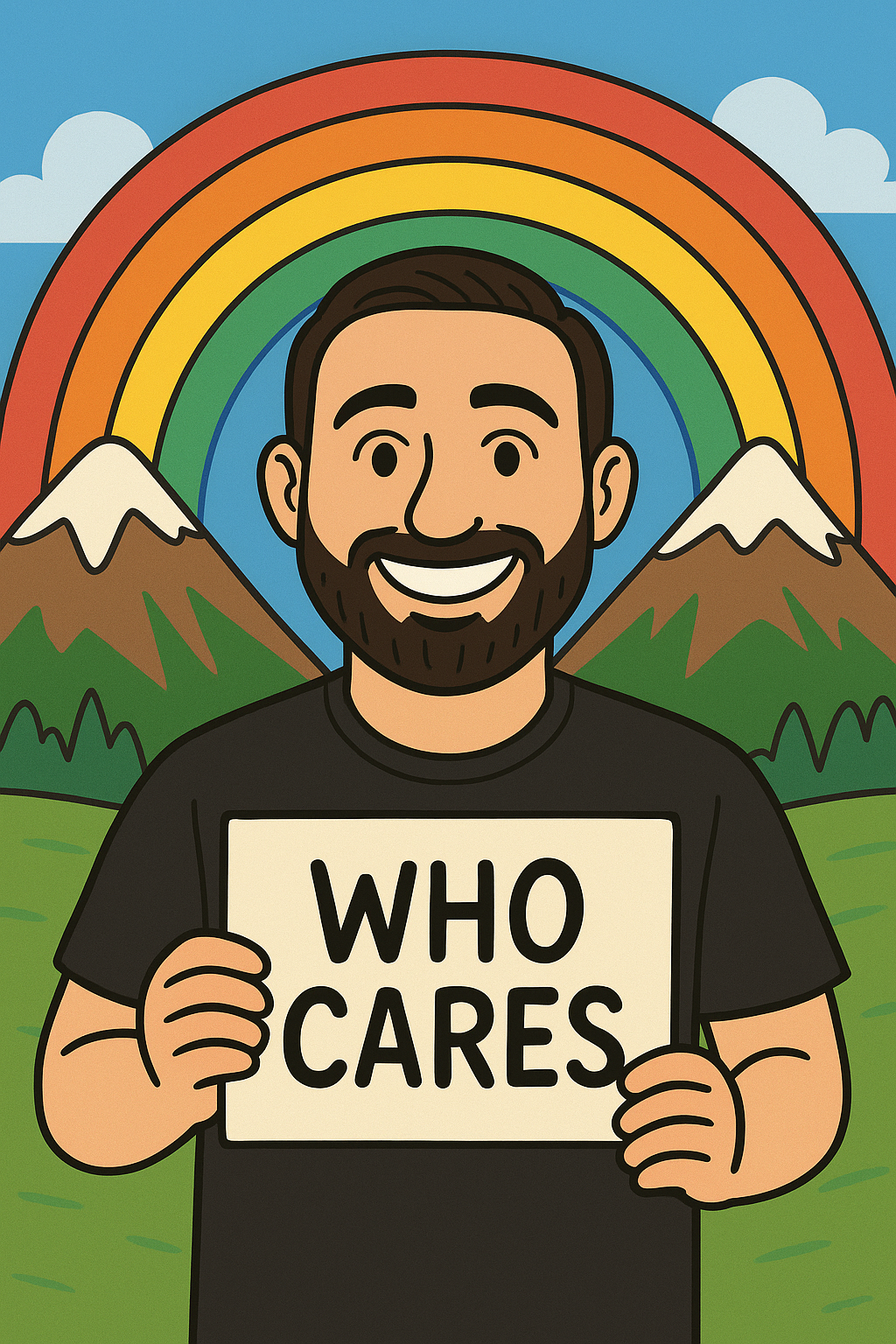
Who Cares? (In the Kindest Way Possible)
The other night after a show, a woman in the crowd shared something quietly and honestly.
She said she wished she could sing or dance in front of people—but she was too afraid of being judged.
Not “I can’t.”… “I’m scared.”
That stuck with me.
Because that fear isn’t really about singing or dancing. It’s about being seen. It’s about worrying what other people might think if we show a piece of ourselves that isn’t polished, practiced, or approved.
And it brought me back to a moment years ago when I was making art alongside a well-established artist. Her work was confident, effortless, clearly shaped by years of experience. Mine felt small in comparison.
I remember staring at my piece and thinking, Why am I even doing this?
I wanted to throw it away before anyone noticed it.
She looked at me, then at my work, and said something I’ve carried with me ever since:
“Art is for you.
This is how you see butterflies.
And that’s what matters.”
We weren’t making “good” butterflies.
We were making our butterflies.
And that’s when it clicked.
Who cares?
Not in a dismissive way.
Not in a “nothing matters” way.
But in a gentle way.
A way that says:
We’re all just working our way through life the best we can.
What “Who Cares” Really Means
When I say who cares, I don’t mean:
Stop trying
Be reckless
Nothing matters anyway
I mean:
You don’t have to carry imagined judgment
You don’t need universal approval
You’re allowed to exist imperfectly
Most of us aren’t afraid of failing.
We’re afraid of being evaluated while we try.
But here’s the truth we forget:
Everyone else is doing the same thing…figuring it out as they go, hiding their own doubts, hoping they’re “doing it right.”
Who cares if your art isn’t the best in the room?
Who cares if your voice shakes?
Who cares if your version looks different?
Not because it’s meaningless…but because it’s human.
The Science of Fear (and Why It Feels So Loud)
Fear isn’t a personal flaw. It’s biology.
Your brain’s alarm system—the amygdala—exists to keep you safe. The problem is that it reacts to social threat the same way it reacts to physical danger.
Judgment, embarrassment, rejection?
Your nervous system reads those as risk.
So when you think about:
singing
dancing
creating
sharing
Your body reacts before your logic catches up.
Fear says: “Don’t do this.”
Not because it’s dangerous,but because it’s unfamiliar.
And your brain would rather keep you comfortable than help you grow.
A Softer Way to Move Through Fear
Instead of trying to “beat” fear, try walking with it.
1. Shrink the moment
You don’t have to perform.
Create where no one else is watching.
Fear learns through experience,not pressure.
2. Name what you’re actually afraid of
Often it’s not the act itself.
It’s:
being judged
being compared
being misunderstood
Naming fear turns it from a monster into information.
3. Ask the real question
Not “Is this good?”
But “Is this mine?”
That’s where freedom lives.
4. Practice “who cares” on purpose
When the critical voice shows up, try responding with:
“Maybe. And I’ll be okay anyway.”
That’s not giving up.
That’s letting go.
The Homework (Low Pressure, High Permission)
This week, do one small thing just for you.
Sing.
Draw.
Dance.
Write.
Create.
No fixing. No sharing. No improving.
Afterward, ask yourself:
What was I worried would happen?
What actually happened?
Did the fear pass?
How did my body feel afterward?
Let the answer matter more than the outcome.
Because life isn’t about doing it perfectly.
It’s about doing it honestly.
And maybe the kindest thing we can remind ourselves is this:
Who cares?
We’re all just doing our best—
and that’s what’s important.
You’re Allowed to Outgrow Things
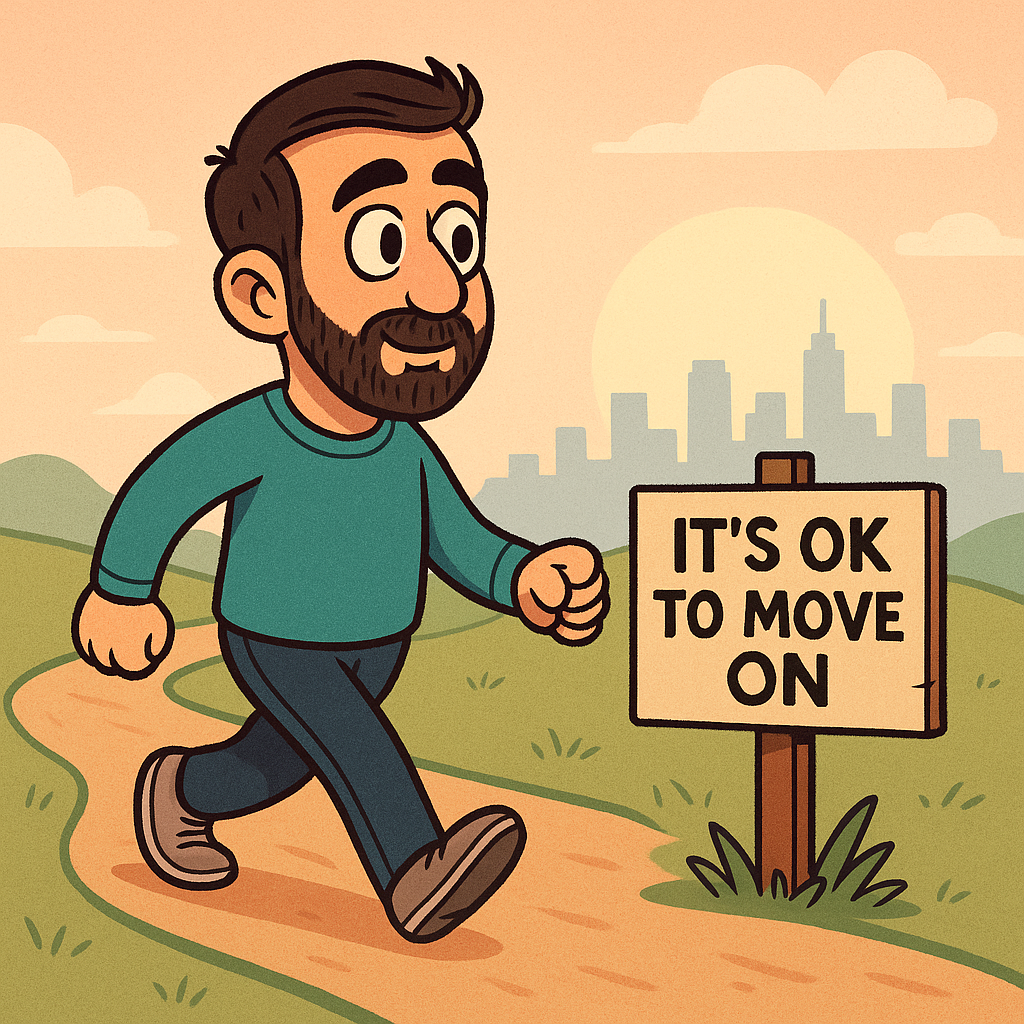
There is a strange feeling that comes from rereading the same chapter of a book again and again. At first it feels comforting. You know the lines. You know where the story is going. But eventually you start to feel it: there is nothing new to discover. The story is stuck. You are stuck. And the more you sit with it, the more you realize you are ready for the next page, even if you are nervous to turn it.
Life has chapters like that too. Seasons you have loved. Roles that once felt perfect. People or routines that helped you grow. But after a while, something shifts inside you. You learn less. You feel inspired less. You can sense yourself stretching past the edges of what used to fit. These shifts are quiet at first, but they always get louder.
That is usually the moment people freeze. We assume the familiar is supposed to last forever, even when our spirit has already begun to move on.
The Band That I Outgrew
I felt this most clearly with a band I used to be in. At one point in my life, it meant everything. It gave me belonging and direction. It helped shape who I was becoming. But as time went on, I started to feel the disconnect. The people in it wanted different things. The energy was not the same. And the part of me that used to leave rehearsals feeling alive started leaving feeling drained.
It was confusing. It was sad. It was uncomfortable to admit that something I cared about so deeply was no longer a fit for who I was becoming. It did not end in a dramatic way. There was no fight or explosion. It was simply the truth that the chapter had stopped growing with me.
Did I regret leaving in the moment? Yes. Do I still think about it sometimes? Of course. Every meaningful chapter leaves a mark. But staying would have been like rereading a page I already knew by heart. The only way forward was to let myself turn the page.
Outgrowing Something Does Not Mean It Failed
People often treat outgrowing as abandoning, but they are not the same. You can appreciate something and still recognize that it no longer fits. You can love the memories and still choose a new direction. You can be grateful for what something gave you and still give yourself permission to grow past it.
Growth looks like:
• realizing something that once filled your bucket now leaves it empty
• wanting different things than you used to
• feeling restless in a place that used to feel safe
• noticing your energy pulling you somewhere new
None of those signs mean something is wrong. They simply mean you are changing.
The Psychology of Turning the Page
Identity is not something you choose once. It is something you revise throughout your life. Your brain continuously updates based on experiences, relationships, and the values you uncover as you move forward. So when a chapter stops matching those internal shifts, you feel it.
Restlessness.
Boredom.
A tightness in your chest you cannot quite name.
A sense of living a life that used to be yours but is not anymore.
These feelings are not failures. They are invitations.
You Are Allowed to Move Forward
You do not owe the world the older version of you. You do not have to stay inside chapters that no longer feel alive. There is no award for holding onto something past its time. There is only the cost of shrinking yourself to make the past comfortable.
You are allowed to grow.
You are allowed to want something else.
You are allowed to choose the next version of yourself.
You are allowed to change the shell you have been living in.
You do not need permission, but if you want it, here it is:
You are allowed to outgrow things, even good things.
A Small Challenge
Think about one part of your life that feels like rereading the same chapter. A habit, a routine, a relationship, a commitment, or an identity you have carried for years. Ask yourself if it still matches who you are now.
Then ask the next question:
If you met yourself today for the first time, would you choose this chapter again?
If the answer is no, maybe it is time to turn the page.
The Quiet Kind of Gratitude
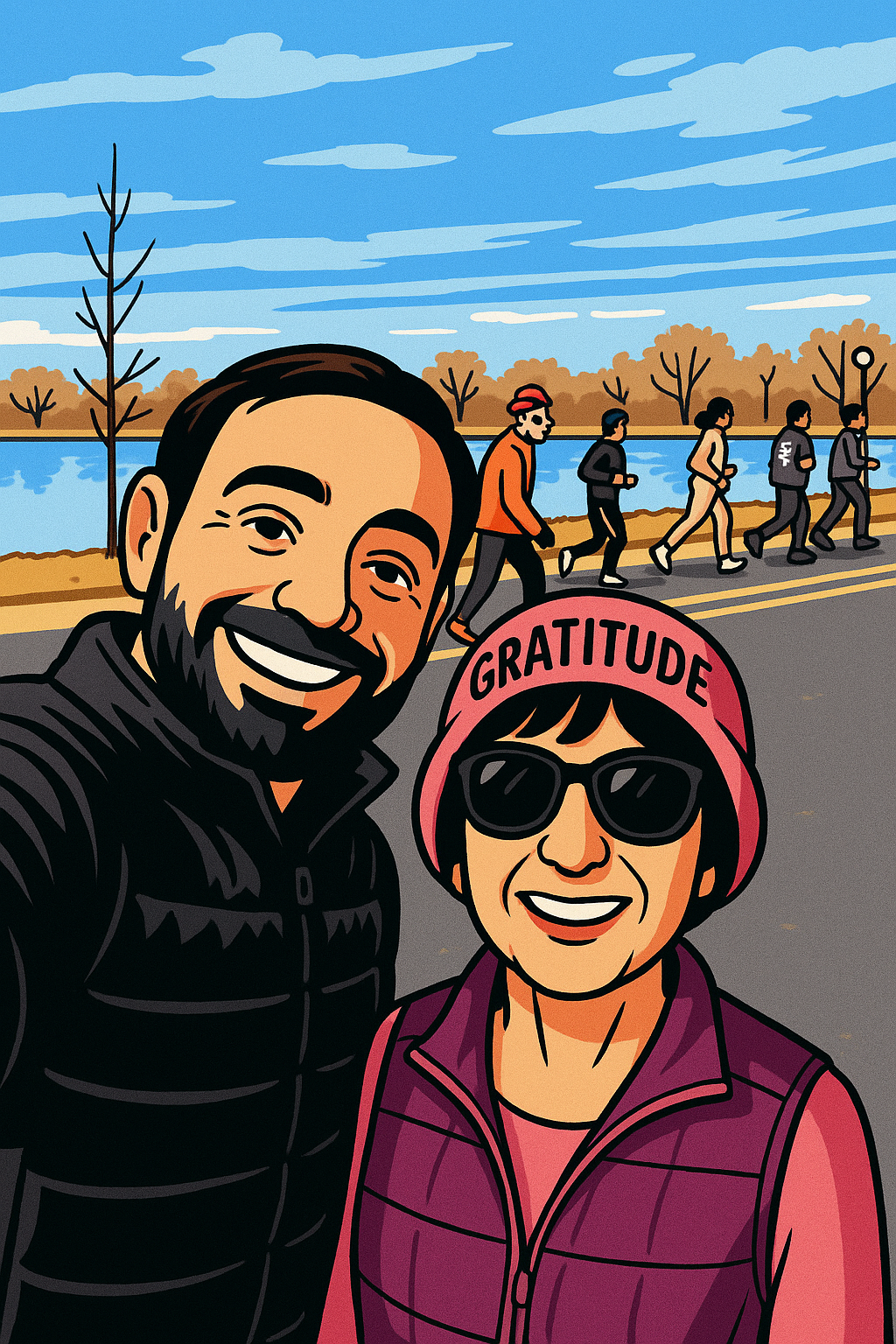
Gratitude hits differently as you get older.
It stops being something you list in a journal or talk about around the holidays. It becomes quieter. Heavier. More honest. Something you feel humming in the background of your life without needing to announce it.
For me, gratitude almost always circles back to my mom.
She was never the type to point out her sacrifices or make her support about her. She just showed up. Over and over, in ways I didn’t fully understand until much later.
I think about being 13 years old, guitar case bigger than I was, playing tiny shows in restaurants and cafés where the “stage” was just a corner with one flickering bulb. Somehow, she drove me to every single one. Weeknights. Weekends. Snowstorms. Long days. She sat in the back, smiling even when I was shaky or unsure — like the music mattered simply because I cared about it.
I think about graduations, too, every milestone, every ceremony, every moment when the future felt both exciting and terrifying. She was there for all of it. Fully present. Fully steady.
And then there were the smaller things, the things that shouldn’t matter as much as they do, but somehow do anyway.
The dessert samplers she’d bring home when she could tell I needed something comforting.
The quiet moments when life felt heavy.
The subtle reminders that someone was rooting for me.
It wasn’t about the desserts.
It was the message behind them:
I see you. I’m with you. I’m not going anywhere.
The older I get, the more I appreciate that consistency.
Because she didn’t just show up when I was thriving.
She showed up when I wasn’t.
She supported the version of me that felt proud and confident, and the version that felt lost, overwhelmed, or unsure who I was supposed to be. So much of who I am today, how I care for people, how I show up for my students, how I handle setbacks, how I try to lead with compassion, it comes directly from her quiet, steady influence.
That’s the kind of gratitude that stays with you.
Not performative.
Not seasonal.
But lived.
The Science of Quiet Gratitude (and How to Practice It Daily)
One thing I’ve learned both personally and through my work is that gratitude doesn’t have to be loud to be powerful. In fact, research shows that the quietest forms of gratitude often do the most good.
Psychologists call this trait gratitude, the ability to consistently notice the good in your life, even in small doses. People who cultivate trait gratitude tend to have:
lower stress and anxiety
better emotional regulation
stronger, more trusting relationships
higher resilience during difficult seasons
And you don’t develop trait gratitude through a once-a-year reflection.
You build it the same way my mom showed up for me, through small, steady moments that add up over time.
Quiet gratitude looks like:
noticing the first warm sip of coffee (If you drink it, hot chocolate for those who like the good stuff)
taking a breath before walking into work and recognizing one thing that feels okay today
paying attention to someone’s softened tone when they speak to you
letting a moment of support actually sink in
remembering who has shown up for you without being asked
Research is clear on this:
You don’t have to feel overwhelmed with gratitude for it to count.
You just have to notice.
Noticing is the practice.
And the practice compounds.
A tiny moment today becomes a little more awareness tomorrow.
A little more grounding next week.
A little more emotional space when life gets chaotic.
For me, quiet gratitude shows up when I think about my mom in those passing moments — when I feel supported, or proud, or when I show up for someone else the way she showed up for me.
It’s not loud.
It’s not dramatic.
But it’s real.
And it changes the way I move through the world.
A Challenge for the Week
Think of the person who has shown up for you in every season — the one who cheered when you were thriving and stayed steady when you weren’t.
Reach out.
Tell them.
Say thank you.
Sometimes gratitude isn’t about grand gestures.
It’s about acknowledging the quiet, consistent love that shaped you — whether you realized it at the time or not.