What to Do When Your Feelings Are Too Big for Your Body Written for kids — and the grown-ups who care about them.
Have you ever felt like your body was suddenly a volcano?
Your heart beats fast.
Your throat feels tight.
Your hands squeeze — or maybe you want to yell, hide, or cry…
even when nothing huge happened on the outside.
I saw this just the other night.
I was at a friend’s house.
Adults were talking in the kitchen — loud laughter, clanking dishes — and I noticed their child slip quietly into the hallway and sit on the floor.
No one else saw it — but I did.
Their knees were pulled in tight.
Eyes glued to one spot on the wall.
Shoulders shaking a little.
Nothing “bad” had happened.
No one was upset with them.
And yet — their body looked full — full of a feeling that was too big to hold alone.
When I sat down nearby and asked softly what it felt like, they whispered:
“It’s like my body is panicking even though I’m not.”
And honestly?
That might be one of the smartest explanations I’ve ever heard.
🧠 Why Big Feelings Happen (Brain Science — Kid Language)
Inside your brain is a little alarm system called the amygdala.
Its job? Keep you safe.
When it thinks something might be scary or too much, it sends signals:
🚨 fast heartbeat
🚨 tight chest
🚨 urge to run, freeze, yell, or hide
Sometimes the alarm is right.
Sometimes it goes off even when you’re actually safe — like when a room is too loud, you make a mistake, or you suddenly feel small around a crowd.
That doesn’t mean you’re “too sensitive.”
It means your brain is trying to help — but it needs tools to calm down and reset.
🎒 Tools You Can Use Anywhere
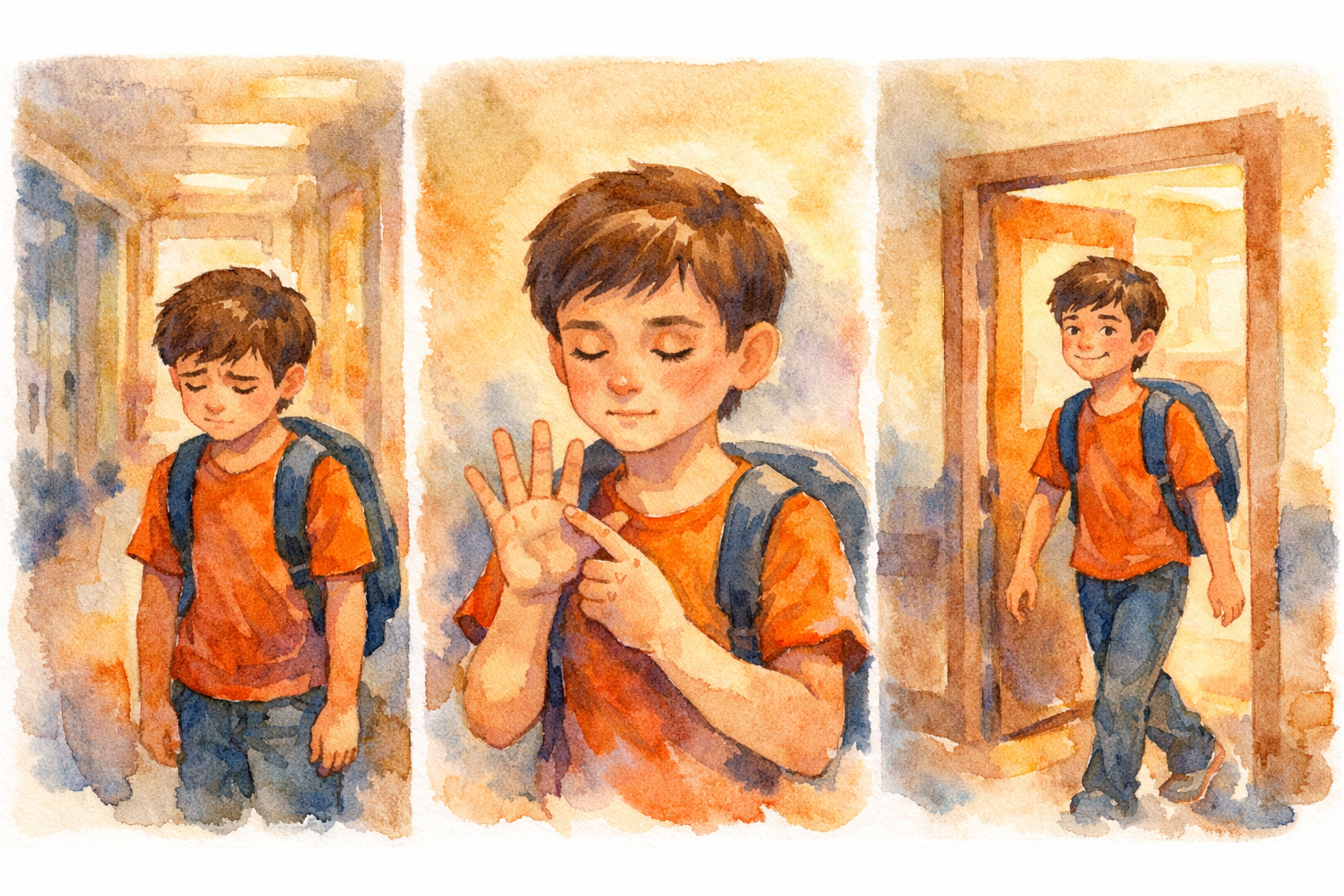
🎢 1️⃣ Roller-Coaster Breathing
Hold up your hand like a mountain range.
⬆️ Slide up a finger – breathe in
⬇️ Slide down the finger – breathe out
Do it slowly.
Your brain hears:
“We’re okay.”
✏️ 2️⃣ Draw the Feeling Outside of You
Grab a pencil or the back of a napkin.
Draw what the feeling looks like.
A storm?
A scribble?
Something spiky or tiny?
Once it’s on paper, you can look at it instead of feeling trapped inside it.
❄️ 3️⃣ The Cold Switch
Cold things help your body calm faster than words sometimes.
Try:
• holding a cold water bottle
• ice cube between your fingers
• splash of water on cheeks
Your nervous system goes from:
“ALERT!” → “We’re safe.”
🗣️ 4️⃣ Say This Sentence
“This feeling is big — but I am bigger.”
Say it softly.
Say it in your mind.
Say it until you feel even a tiny shift.
🌱 A Story Ending — and a Beginning
Back in that hallway at my friend’s house —
the child tried roller-coaster breathing.
They didn’t speak.
They just traced their fingers… slow.
And after a minute, their body softened.
They stood up, walked back into the living room, and rejoined the world — not because the feeling disappeared…
but because they remembered they weren’t stuck.
Big feelings don’t make you weak.
Knowing what to do with them makes you powerful.
🧡 Try This Together (Kids + Adults)
Next time a feeling fills your whole body, you can both try:
Hand on chest.
Slow breath.
And a whisper:
“I’m allowed to feel this. And I can help myself through it.”
That’s strength.
And that’s growing.
A Season of Fewer Tabs
A Season of Fewer Tabs
I’m bad at this.
Let’s just start there.
I am not naturally good at slowing down, doing less, or deciding that something is finished. My brain is always quietly… and loudly… asking:
“Okay… but what’s next?”
Even when things are good.
Especially when things are good.
And honestly? I see the same thing happening in schools all the time.
More programs.
More data.
More emails.
More interventions.
More enrichment.
More clubs.
More reminders to “just push through a little longer.”
Somewhere along the way, “doing enough” stopped feeling like enough.
The Tab Problem
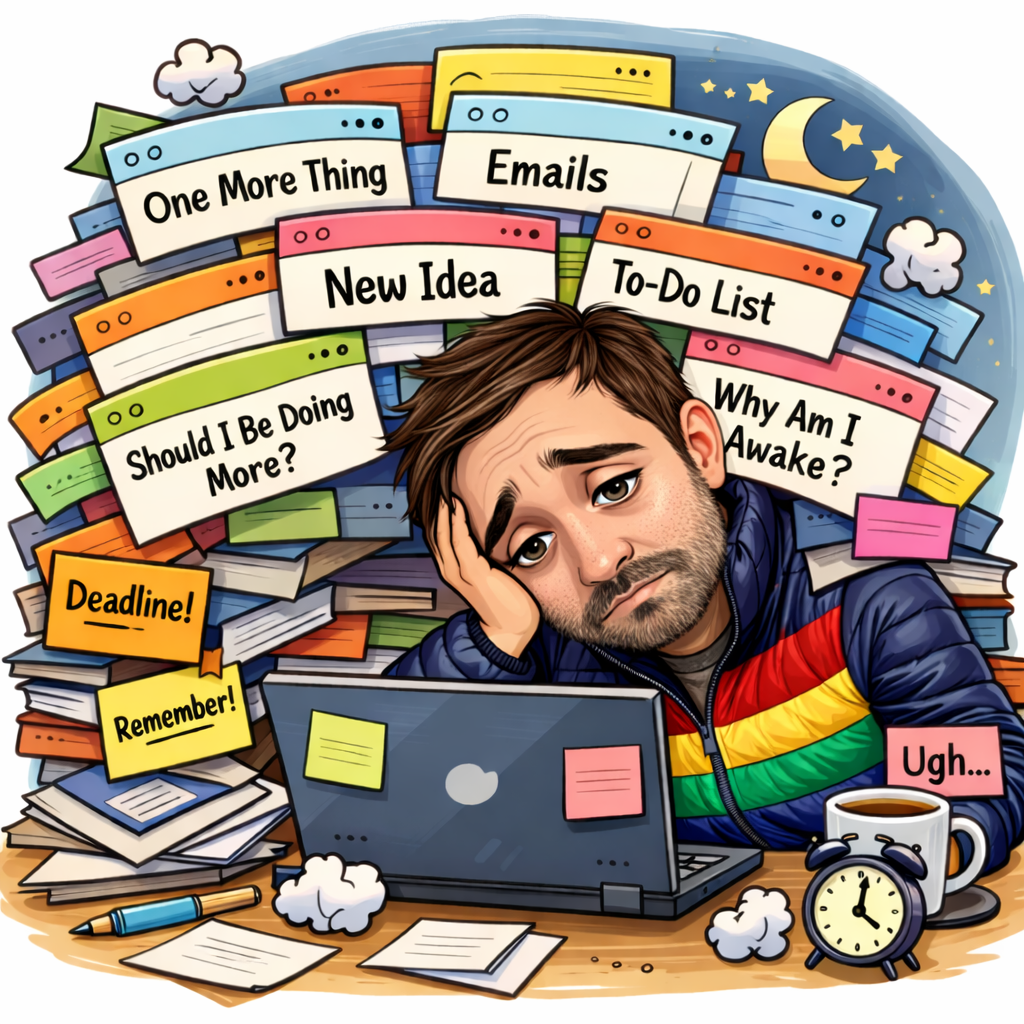
Recently I realized my brain feels like my laptop when I have too many tabs open.
Nothing is technically broken —
but everything is slower.
A little glitchy.
Slightly overheating.
Constantly humming in the background.
That’s what happens when we keep adding… without ever closing.
And here’s the part I don’t love admitting:
I often confuse being busy with being responsible.
If I’m doing more → I must be trying hard.
If I’m tired → it must mean I care.
If I can’t sleep → it’s probably because I haven’t figured it all out yet.
Spoiler: that’s not how sleep works.
What This Does to Sleep
When we don’t give ourselves permission to stop,
our brain never gets the signal that it’s safe to power down.
So at night, instead of rest, we get:
Mental replay
To-do list reruns
Conversations that already happened
Conversations that might happen
A strong urge to solve everything at 11:47 PM
It’s not because we’re bad at sleeping.
It’s because our nervous system still thinks we’re… on.
The Science (Friendly Version)
There’s a reason we stay busy — and it’s not because we love exhaustion.
From a psychological lens:
Being busy gives us predictability
Productivity provides short-term relief
Constant motion keeps us from sitting with discomfort
Our brains are wired to avoid uncertainty.
Stillness removes distraction — which means we suddenly hear the thoughts we’ve been dodging:
Am I doing enough?
What if I disappoint someone?
What if I stop and realize I’m overwhelmed?
What if… I don’t like how this feels?
Busyness becomes a coping strategy —
a socially approved one.
And in schools, this shows up as:
Over-programming
Overscheduling
Adults modeling exhaustion as commitment
Kids learning early that rest is something you earn, not something you need
When Enough Is… Enough
The hard question is never:
“What else should we add?”
The harder one is:
“What could we stop doing and still be okay?”
Or even scarier:
“What if we stopped… and nothing bad happened?”
A season of fewer tabs doesn’t mean giving up.
It means choosing intentionally.
Capacity is not unlimited — for adults or kids.
Sometimes the healthiest move
is closing something gently and saying:
“This is enough for now.”
Homework (Gentle, I Promise)
1️⃣ The Tab Audit
Write down 5 things currently taking up mental space.
Ask:
• Does this still matter?
• Is this mine to carry?
• Could this wait?
Close one tab. Just one.
2️⃣ The “Enough” Sentence
Once a day, finish:
“Today, enough looked like ______.”
No fixing.
No improving.
Just noticing.
3️⃣ The Nighttime Test
If sleep has been hard, ask:
“What am I afraid will happen if I stop thinking about this tonight?”
You don’t have to answer it.
Simply naming it is powerful.
🤍 Final Thought
I don’t have this figured out.
I’m practicing it alongside everyone else.
But I’m learning that:
Rest isn’t laziness
Slowing down isn’t quitting
And fewer tabs doesn’t mean fewer things matter
Sometimes it just means
we’re finally giving our brain — and our body —
permission to breathe.
And honestly?
That feels like enough for now.
You’re Allowed to Outgrow Things
There is a strange feeling that comes from rereading the same chapter of a book again and again. At first it feels comforting. You know the lines. You know where the story is going. But eventually you start to feel it: there is nothing new to discover. The story is stuck. You are stuck. And the more you sit with it, the more you realize you are ready for the next page, even if you are nervous to turn it.
Life has chapters like that too. Seasons you have loved. Roles that once felt perfect. People or routines that helped you grow. But after a while, something shifts inside you. You learn less. You feel inspired less. You can sense yourself stretching past the edges of what used to fit. These shifts are quiet at first, but they always get louder.
That is usually the moment people freeze. We assume the familiar is supposed to last forever, even when our spirit has already begun to move on.
The Band That I Outgrew
I felt this most clearly with a band I used to be in. At one point in my life, it meant everything. It gave me belonging and direction. It helped shape who I was becoming. But as time went on, I started to feel the disconnect. The people in it wanted different things. The energy was not the same. And the part of me that used to leave rehearsals feeling alive started leaving feeling drained.
It was confusing. It was sad. It was uncomfortable to admit that something I cared about so deeply was no longer a fit for who I was becoming. It did not end in a dramatic way. There was no fight or explosion. It was simply the truth that the chapter had stopped growing with me.
Did I regret leaving in the moment? Yes. Do I still think about it sometimes? Of course. Every meaningful chapter leaves a mark. But staying would have been like rereading a page I already knew by heart. The only way forward was to let myself turn the page.
Outgrowing Something Does Not Mean It Failed
People often treat outgrowing as abandoning, but they are not the same. You can appreciate something and still recognize that it no longer fits. You can love the memories and still choose a new direction. You can be grateful for what something gave you and still give yourself permission to grow past it.
Growth looks like:
• realizing something that once filled your bucket now leaves it empty
• wanting different things than you used to
• feeling restless in a place that used to feel safe
• noticing your energy pulling you somewhere new
None of those signs mean something is wrong. They simply mean you are changing.
The Psychology of Turning the Page
Identity is not something you choose once. It is something you revise throughout your life. Your brain continuously updates based on experiences, relationships, and the values you uncover as you move forward. So when a chapter stops matching those internal shifts, you feel it.
Restlessness.
Boredom.
A tightness in your chest you cannot quite name.
A sense of living a life that used to be yours but is not anymore.
These feelings are not failures. They are invitations.
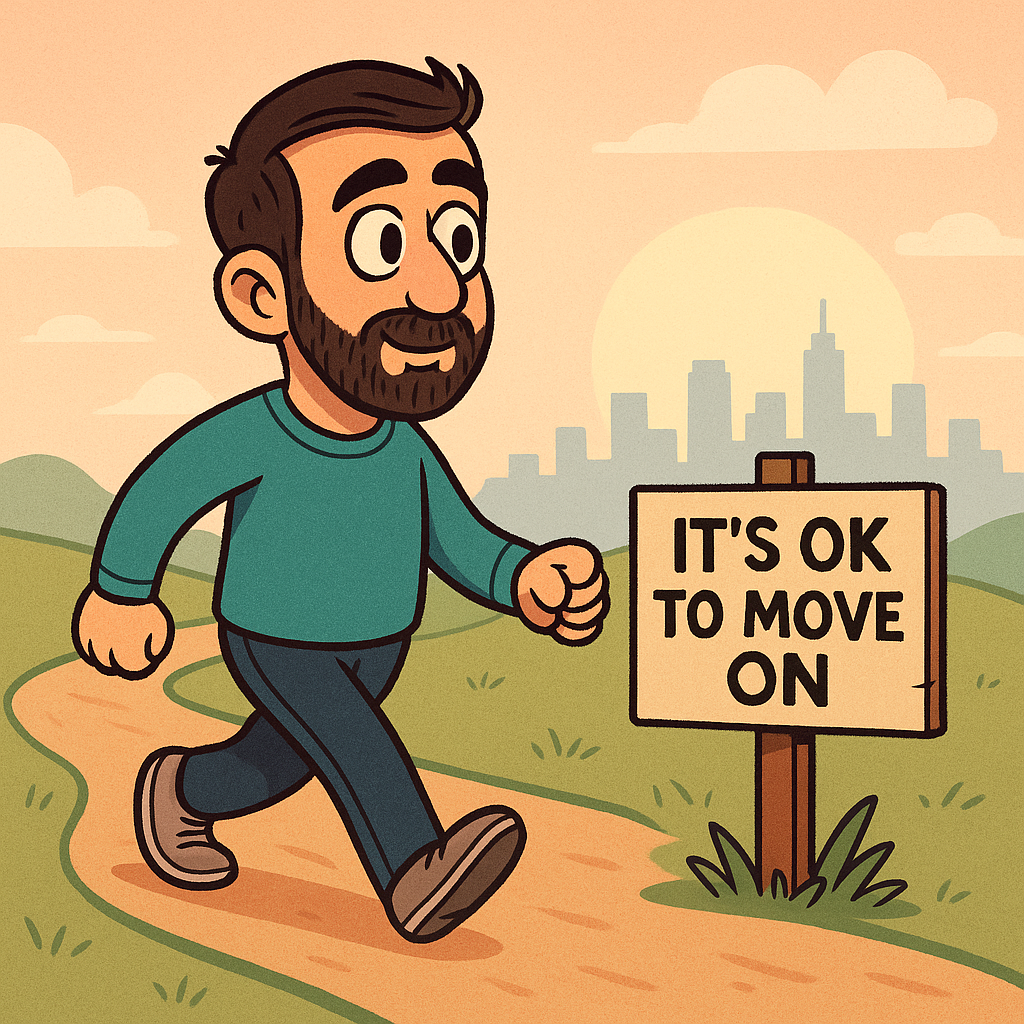
You Are Allowed to Move Forward
You do not owe the world the older version of you. You do not have to stay inside chapters that no longer feel alive. There is no award for holding onto something past its time. There is only the cost of shrinking yourself to make the past comfortable.
You are allowed to grow.
You are allowed to want something else.
You are allowed to choose the next version of yourself.
You are allowed to change the shell you have been living in.
You do not need permission, but if you want it, here it is:
You are allowed to outgrow things, even good things.
A Small Challenge
Think about one part of your life that feels like rereading the same chapter. A habit, a routine, a relationship, a commitment, or an identity you have carried for years. Ask yourself if it still matches who you are now.
Then ask the next question:
If you met yourself today for the first time, would you choose this chapter again?
If the answer is no, maybe it is time to turn the page.