
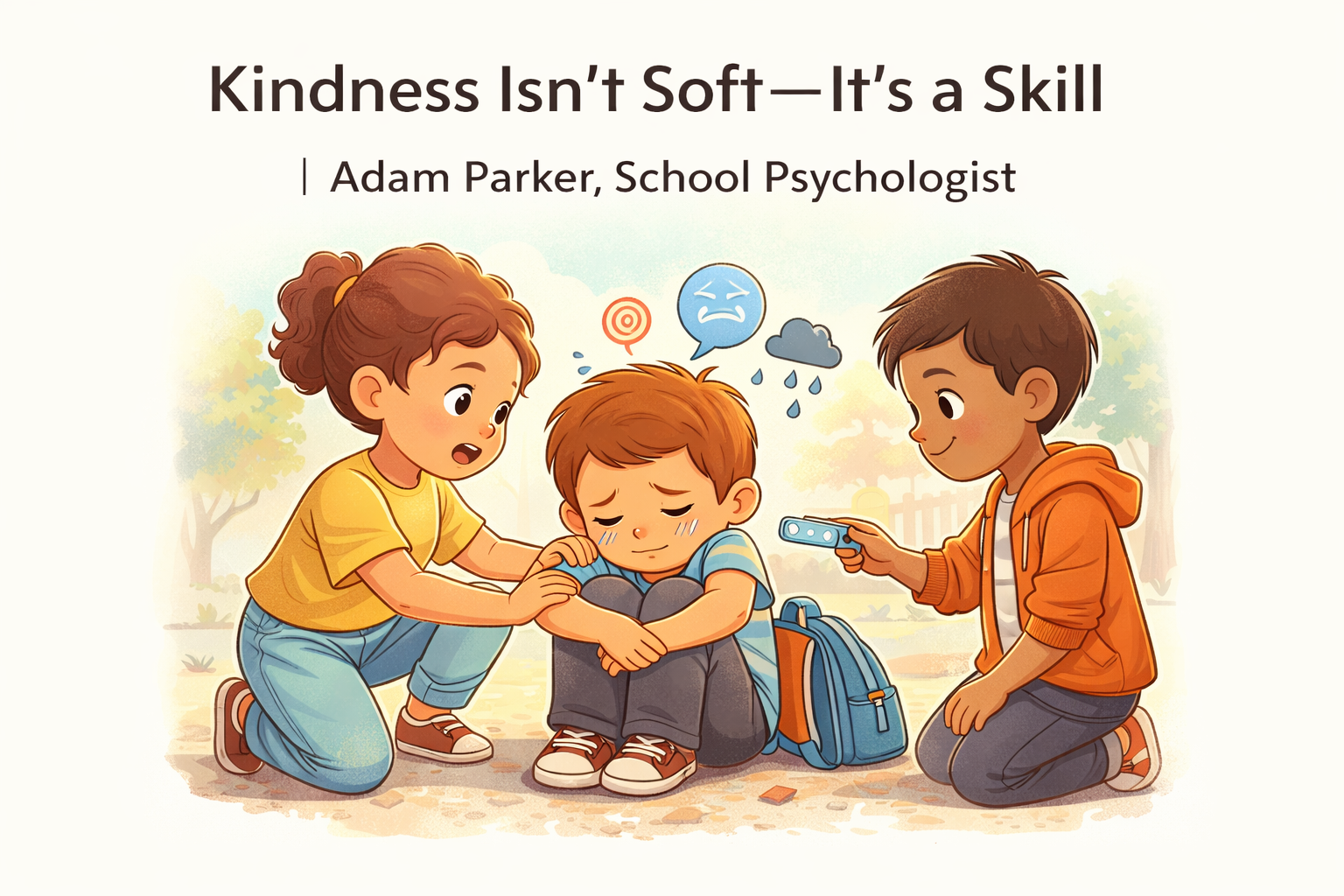
Kindness Isn’t Soft…It’s a Skill
Kindness gets misunderstood.
We talk about it like it’s just being nice.
Sharing.
Smiling.
Saying please and thank you.
But real kindness, the kind that lasts, is not soft.
It’s a skill.
Kindness Requires Regulation
You can’t be kind when you’re dysregulated.
When your body is flooded with stress, fear, or anger, the brain shifts into protection mode.
And protection mode doesn’t think about others, it thinks about survival.
That’s why kids who are struggling emotionally often get labeled as “unkind.”
Not because they don’t care.
But because their nervous system is busy.
Kindness comes after regulation, not before it.
You Can’t Force Kindness
We try though.
“Be nice.”
“Say sorry.”
“That wasn’t kind.”
But forced kindness teaches performance, not empathy.
Kids learn kindness when they experience it.
When someone:
pauses instead of snapping
stays instead of walking away
listens instead of correcting
That’s how the brain learns,
“This is how humans treat each other.”
Kindness Is Built in Small Moments
Kindness isn’t grand gestures.
It’s:
letting someone calm down before talking
inviting someone back into the game
noticing when a friend is quiet
choosing repair over being right
Those skills don’t come naturally to all kids.
They are taught, practiced, and modeled.
The Kindness That Matters Most
The kindness kids remember isn’t always how others treated them.
It’s how they were treated when they struggled.
When they messed up.
When they were loud.
When they were overwhelmed.
When they were not their best selves.
That’s the kindness that sticks.
And that’s the kindness that teaches kids how to be kind to others — and eventually, to themselves.