
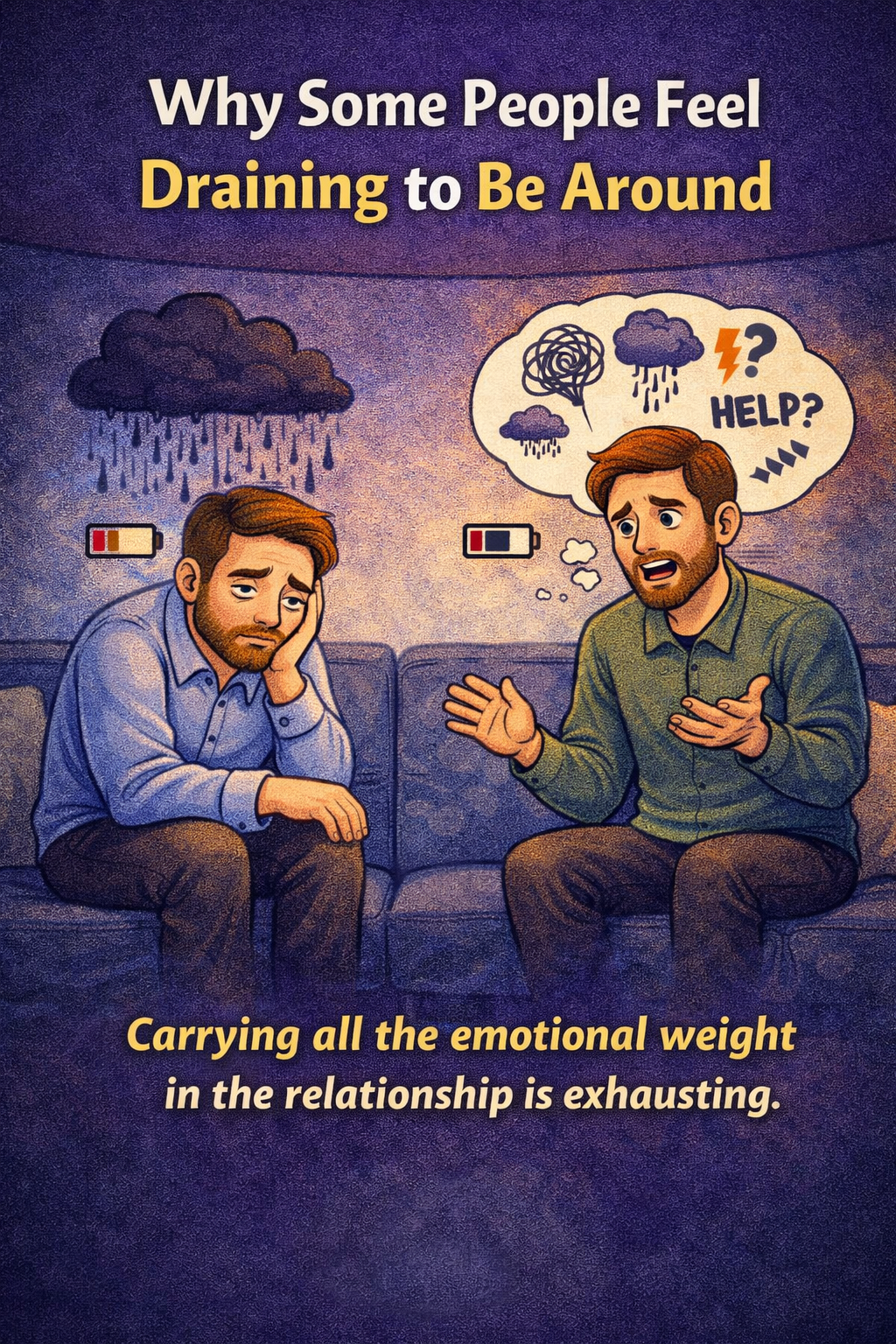
Why Some People Feel Draining to Be Around
You know what’s interesting about friendships as you get older?
You start realizing that not every relationship is supposed to feel draining.
For a long time, I think I confused loyalty with emotional endurance. I thought being a good friend meant always listening, always helping, always calming someone down, always carrying the emotional weight of the relationship. And don’t get me wrong, good friendships absolutely involve support. Life gets messy. People go through hard seasons. We all need people sometimes.
But there’s a difference between supporting someone and becoming responsible for their emotional stability.
I’ve had friendships where I’d leave dinner, a phone call, or even just a quick interaction feeling strangely exhausted. Not because anything dramatic happened. Just because the entire relationship revolved around managing someone else’s emotions. Every conversation became about a crisis. Every frustration needed immediate solving. Every situation somehow became emotionally urgent.
And after enough time, you start noticing something: some people add energy to your life, and some people quietly take it from you.
The older I get, the more I value people who can carry themselves emotionally. Not people who never struggle, honestly, I trust people more when they’re open about struggling …but people who know how to regulate themselves without making everyone around them responsible for fixing their internal world.
I remember thinking about this after spending time with two different groups of people in the same week. One interaction left me completely depleted. I felt tense driving home, replaying the conversation, almost like I had just worked a shift instead of hung out with friends. The other group? We laughed, talked about real things, vented a little, joked around, and afterward I felt lighter than when I arrived. Same amount of time. Completely different emotional effect.
That’s when it really clicked for me.
Healthy relationships don’t constantly feel like emotional triage.
The best people to be around usually bring some combination of self-awareness, accountability, humor, perspective, and emotional steadiness. They don’t dump every feeling onto other people and expect them to carry it. They own their emotions while still allowing connection and vulnerability.
And honestly, those relationships feel safe in a completely different way. You don’t leave feeling responsible for someone else’s nervous system.
You leave feeling more like yourself.
I think a lot of us slowly learn this lesson over time: being kind does not mean you have to emotionally absorb everyone around you. You can care deeply about people while also recognizing which relationships consistently leave you anxious, depleted, guilty, or emotionally overextended.
The people who belong in your life long term are usually the ones who add something to it — peace, laughter, perspective, encouragement, honesty, calm, energy, growth. Not constant chaos disguised as closeness.
And once you experience relationships that feel energizing instead of exhausting, it becomes a lot harder to settle for the ones that only drain you.
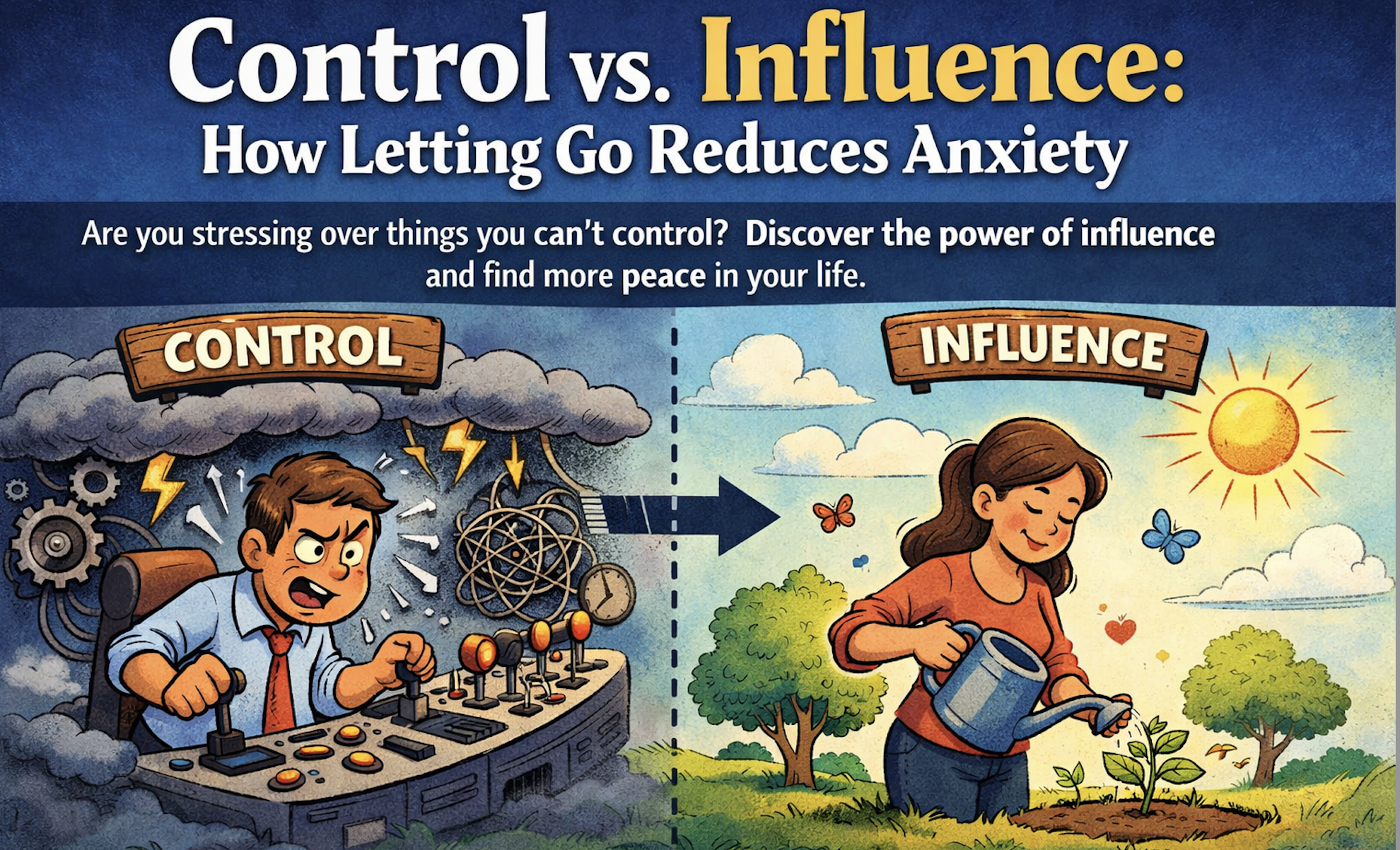
Control vs. Influence
Why trying to control everything might be the thing making you anxious
There’s a quiet trap most of us fall into without noticing.
We start trying to control things that were never actually ours to control.
Other people’s reactions.
How quickly a problem resolves.
Whether someone understands us.
How an event turns out.
Whether our plans go exactly right.
The strange part is that the more we try to control those things, the more anxious we become.
Because deep down we know something our brains don’t want to admit:
Control is mostly an illusion.
Very little in life is truly under our control.
Weather.
Traffic.
Other people’s feelings.
How a conversation lands.
Whether someone changes their mind.
But there is something else available to us.
Something much quieter.
Influence.
Influence is different.
Influence says:
I can’t control the outcome…
but I can shape the conditions.
A teacher can’t control whether a student tries hard in class.
But they can create a room where trying feels safe.
A parent can’t control whether their child makes the perfect choice.
But they can influence the kind of person their child becomes.
A musician can’t control whether a crowd loves a song.
But they can influence the moment by showing up fully and playing it well.
Influence works slowly.
Control tries to work immediately.
That’s why control fuels anxiety.
When we believe we must control the outcome, every uncertainty feels dangerous.
But when we shift to influence, the pressure changes.
Instead of:
“I have to make this go perfectly.”
It becomes:
“What small thing can I do to move this in a better direction?”
Influence is lighter.
It leaves room for other people’s freedom.
It leaves room for mistakes.
It leaves room for life to unfold.
Ironically, people who stop trying to control everything often end up having more real impact.
Because people don’t respond well to control.
But they respond to presence, patience, and consistency.
And that’s where influence lives.
So the next time anxiety creeps in, it might be worth asking one simple question:
Am I trying to control this…
or
am I trying to influence it?
One of those will exhaust you.
The other one will set you free.