
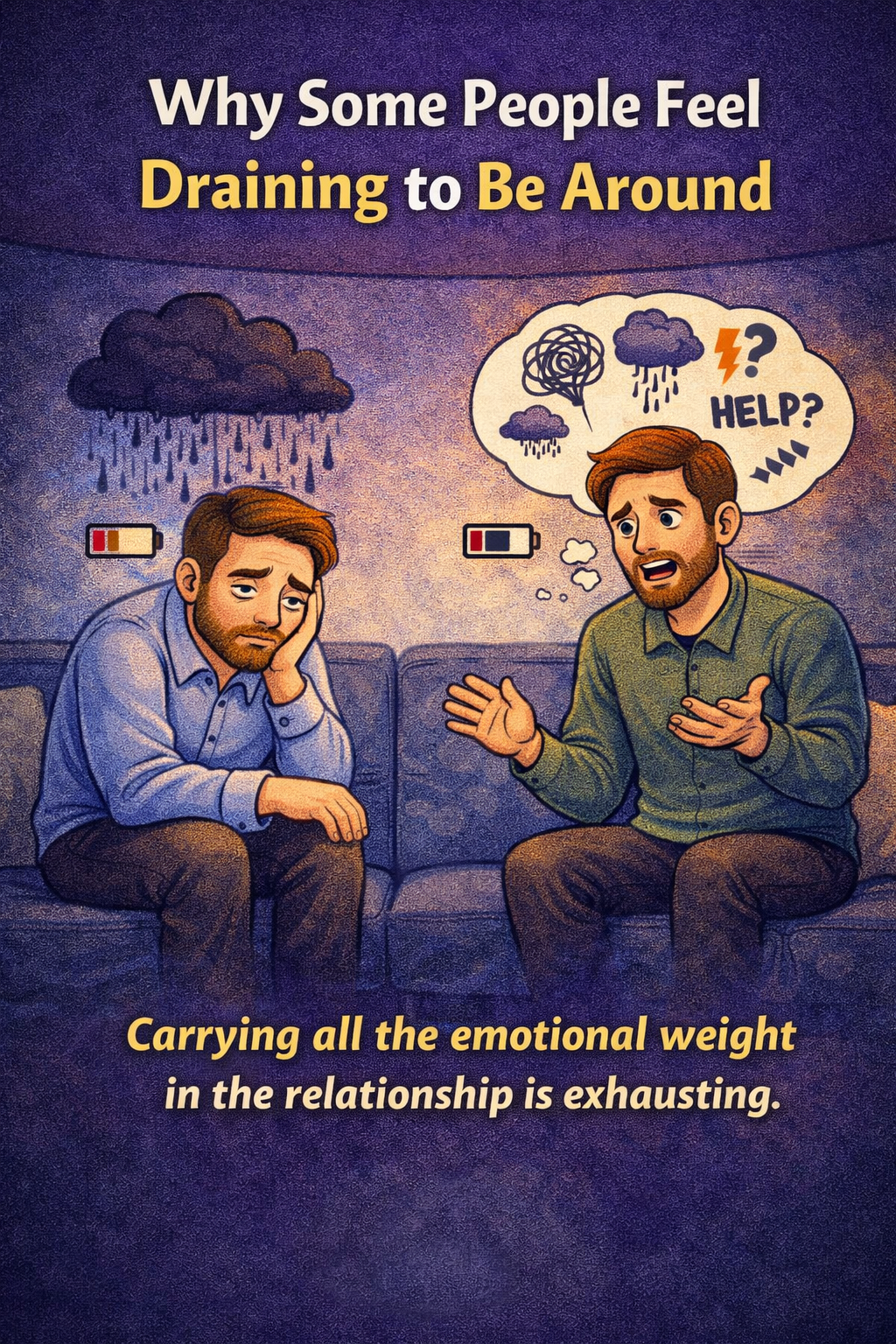
Why Some People Feel Draining to Be Around
You know what’s interesting about friendships as you get older?
You start realizing that not every relationship is supposed to feel draining.
For a long time, I think I confused loyalty with emotional endurance. I thought being a good friend meant always listening, always helping, always calming someone down, always carrying the emotional weight of the relationship. And don’t get me wrong, good friendships absolutely involve support. Life gets messy. People go through hard seasons. We all need people sometimes.
But there’s a difference between supporting someone and becoming responsible for their emotional stability.
I’ve had friendships where I’d leave dinner, a phone call, or even just a quick interaction feeling strangely exhausted. Not because anything dramatic happened. Just because the entire relationship revolved around managing someone else’s emotions. Every conversation became about a crisis. Every frustration needed immediate solving. Every situation somehow became emotionally urgent.
And after enough time, you start noticing something: some people add energy to your life, and some people quietly take it from you.
The older I get, the more I value people who can carry themselves emotionally. Not people who never struggle, honestly, I trust people more when they’re open about struggling …but people who know how to regulate themselves without making everyone around them responsible for fixing their internal world.
I remember thinking about this after spending time with two different groups of people in the same week. One interaction left me completely depleted. I felt tense driving home, replaying the conversation, almost like I had just worked a shift instead of hung out with friends. The other group? We laughed, talked about real things, vented a little, joked around, and afterward I felt lighter than when I arrived. Same amount of time. Completely different emotional effect.
That’s when it really clicked for me.
Healthy relationships don’t constantly feel like emotional triage.
The best people to be around usually bring some combination of self-awareness, accountability, humor, perspective, and emotional steadiness. They don’t dump every feeling onto other people and expect them to carry it. They own their emotions while still allowing connection and vulnerability.
And honestly, those relationships feel safe in a completely different way. You don’t leave feeling responsible for someone else’s nervous system.
You leave feeling more like yourself.
I think a lot of us slowly learn this lesson over time: being kind does not mean you have to emotionally absorb everyone around you. You can care deeply about people while also recognizing which relationships consistently leave you anxious, depleted, guilty, or emotionally overextended.
The people who belong in your life long term are usually the ones who add something to it — peace, laughter, perspective, encouragement, honesty, calm, energy, growth. Not constant chaos disguised as closeness.
And once you experience relationships that feel energizing instead of exhausting, it becomes a lot harder to settle for the ones that only drain you.
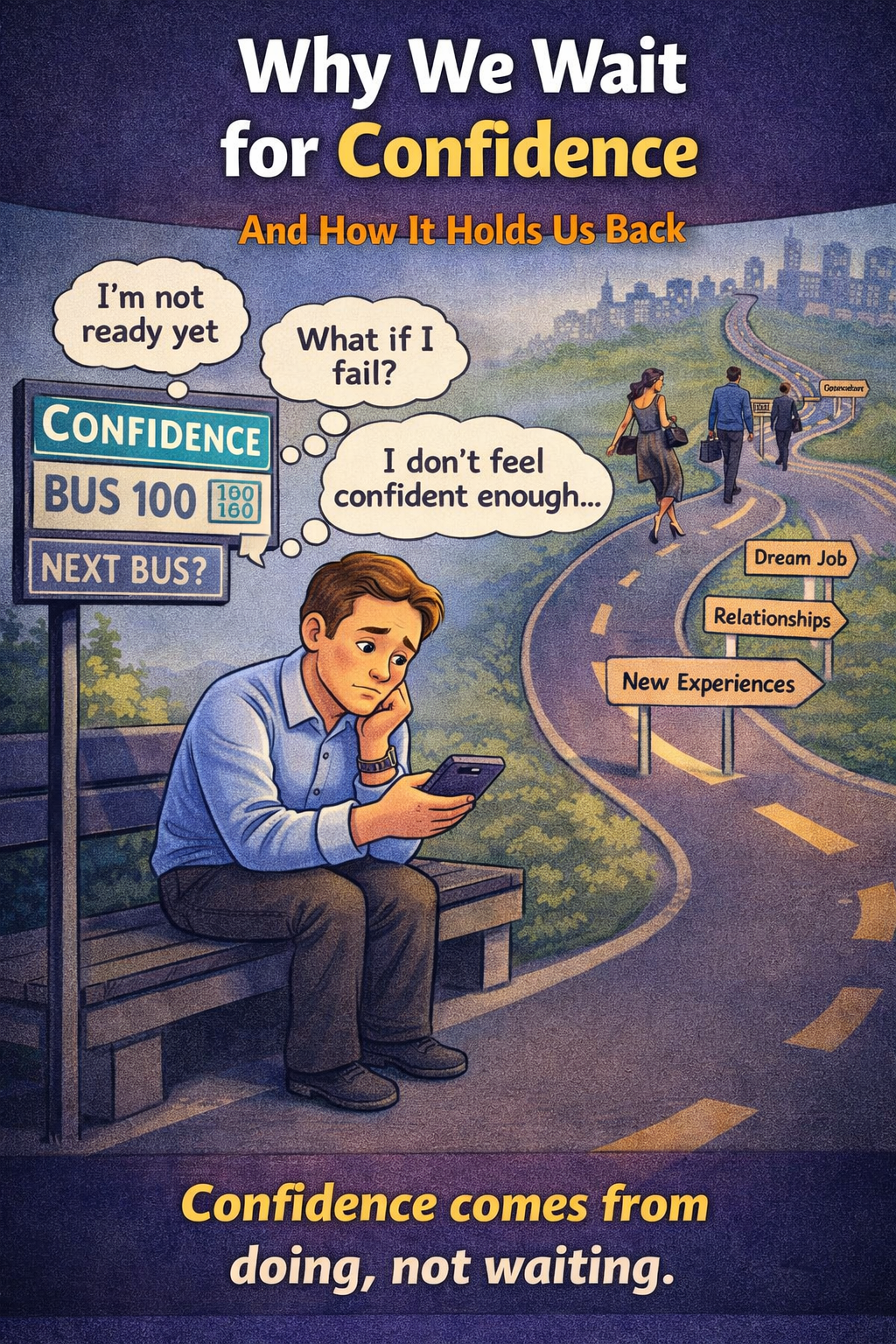
Why Waiting for Confidence Doesn’t Work
A lot of people believe confidence is something you’re supposed to feel before you act. The idea is that once you finally feel ready, once those nerves calm down and your brain gives you the green light…then you’ll take the step. You’ll speak up in the meeting, try something new, start the project, or have the conversation you’ve been avoiding. It sounds nice in theory, but in real life, that’s almost never how it works.
Confidence doesn’t usually show up first. It tends to come after we act, not before.
I was reminded of this the first time I played live music in front of people. It wasn’t some massive crowd, but in my head it might as well have been a stadium. I remember standing there with sweaty hands, overthinking every note, and feeling completely unprepared. There was no moment where I suddenly felt confident. No internal voice saying, “You’ve got this.” If anything, it was the opposite, my brain was actively suggesting I pack up and disappear. But I played anyway. It wasn’t perfect (honestly, parts of it were objectively rough), but I got through it. And that experience, messy as it was, mattered more than any amount of mental preparation I could have done beforehand.
That’s the part people miss. Confidence isn’t something your brain hands you in advance as a reward for thinking hard enough. It’s something your brain builds through evidence. Each time you do something uncomfortable and survive it, your brain takes note. “Okay, we tried that. It wasn’t ideal, but we didn’t fall apart. Maybe we can handle that again.” Over time, those small moments stack up, and eventually your brain starts to trust you, not because things feel easy, but because you’ve proven you can handle difficulty.
If you think about learning anything new, playing guitar, driving a car, giving a presentation, no one starts confident. The first attempts are almost always awkward and clumsy. You hesitate, you overthink, you make mistakes. That’s not a sign that something is wrong; that is the process. The problem is that many people interpret that discomfort as a signal to stop, when in reality it’s just a normal part of learning.
This is why waiting to feel confident can keep people stuck for a long time. The feeling they’re waiting for usually doesn’t arrive until after they’ve already started. It’s a bit like waiting to feel in shape before going to the gym—it sounds logical, but it completely reverses how growth actually works.
From a psychological standpoint, confidence is less about emotion and more about memory. Your brain is constantly scanning past experiences and asking, “Have we done something like this before, and did we make it through?” Every time the answer is yes, even a shaky, imperfect yes, it strengthens your sense of capability. Over time, that repeated exposure builds something more durable than a temporary feeling: it builds trust in yourself.
That’s why confident people aren’t necessarily less anxious or more certain. They’ve just accumulated more experiences where they’ve handled discomfort and come out the other side. They don’t expect things to feel easy; they trust that they can figure things out when they’re hard.
So confidence isn’t the absence of nerves, self-doubt, or awkwardness. It’s the belief that those things won’t overwhelm you. And that belief isn’t something you think your way into, it’s something you build through action.
If there’s something you’ve been putting off because you’re waiting to feel more confident, it might be worth flipping the approach. Instead of asking, “How do I feel ready?” the better question is, “What’s one small version of this I could try right now?” Not perfectly, not flawlessly, just enough to give your brain a new piece of evidence.
Because in the end, confidence doesn’t come from waiting. It comes from showing up, doing the uncomfortable thing, and realizing, again and again, that you’re more capable than your brain initially gives you credit for.
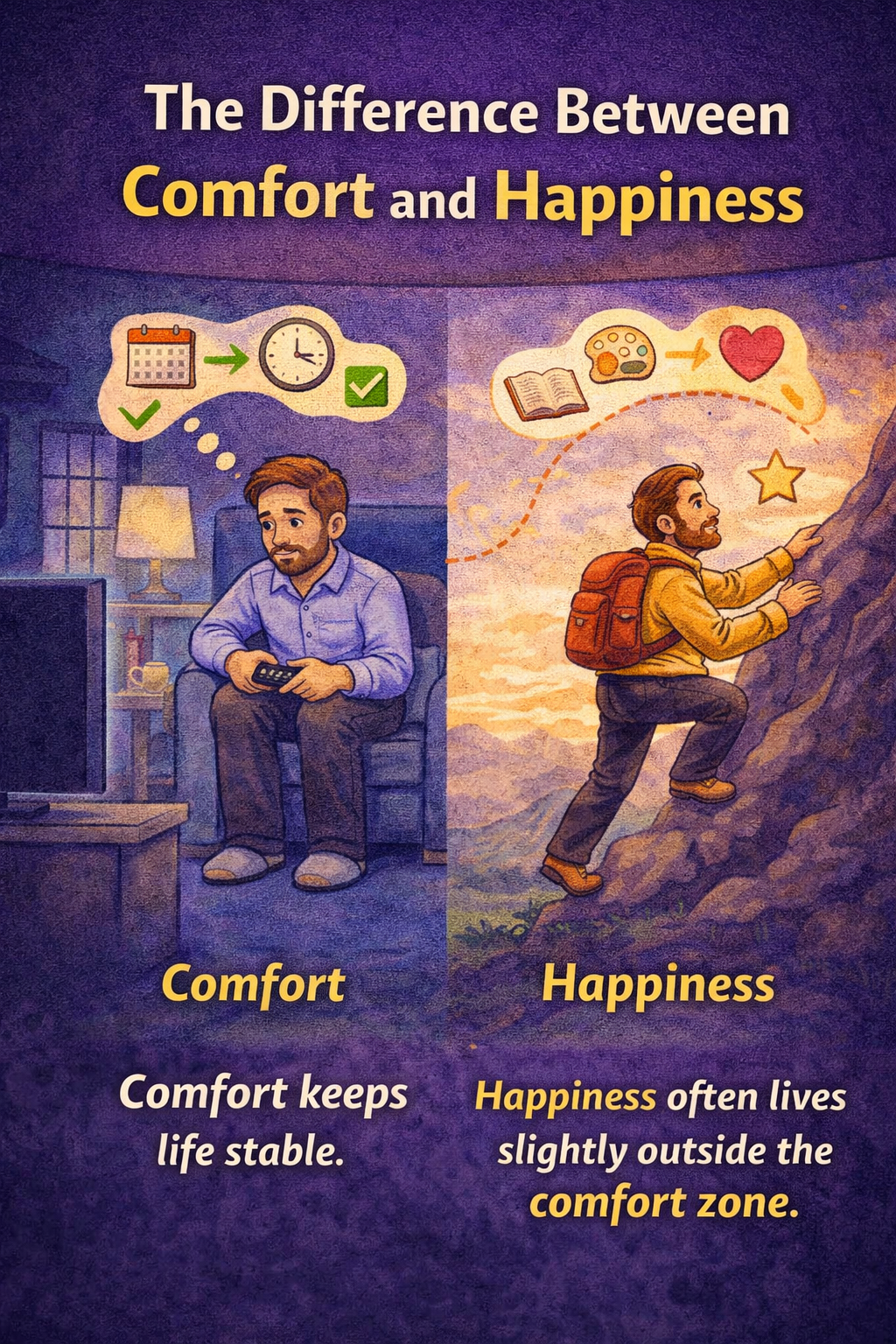
The Difference Between Comfort and Happiness
Comfort and happiness often look the same from the outside.
A routine.
A familiar place.
A life that feels steady and predictable.
But psychologically, they’re very different experiences.
Comfort feels safe.
It’s the same breakfast order.
The same drive.
The same conversations.
The same environments where you already know how things will go.
Comfort protects you from stress.
And there’s nothing wrong with that.
We all need places in our lives where we can relax and not have to think so much.
But happiness doesn’t really come from staying there.
Happiness tends to show up when we move toward something that matters.
Trying a new food.
Traveling somewhere unfamiliar.
Starting a conversation with someone you wouldn’t normally talk to.
Learning something new.
Putting yourself in a situation where you don’t quite know how it’s going to go.
Those moments don’t feel comfortable.
They feel uncertain.
Sometimes awkward.
Sometimes even a little stressful.
And that’s where people can get stuck….
Because when something feels uncomfortable, the brain is quick to say:
“Something’s wrong!” “Don’t do this!
But a lot of the time, nothing is wrong.
You’re just doing something new.
You’re stretching.
You’re stepping outside of what’s familiar.
And that feeling… the slight discomfort, the uncertainty… is often the exact space where growth happens.
Comfort keeps life stable.
But too much comfort can slowly make life feel smaller.
The days start to blur together.
Nothing feels especially bad… but nothing feels especially exciting either.
Happiness usually lives just outside that space.
Not in chaos.
Not in constant stress.
Just a little beyond what you’re used to.
It’s in trying something different.
Meeting someone new.
Saying yes when your first instinct is to stay where it’s easy.
That doesn’t mean you need to change everything.
Sometimes it’s small.
Ordering something new instead of the usual.
Taking a different route.
Talking to someone new.
Putting yourself in a slightly unfamiliar situation and staying there long enough to realize you’re okay.
The goal isn’t to eliminate comfort.
Comfort matters.
But when comfort becomes the only goal, life can start to shrink without you really noticing.
And sometimes, the way back to feeling more alive isn’t a huge change.
It’s just a small stretch.
So the question becomes:
Where might you be ready to step just a little outside your comfort zone?
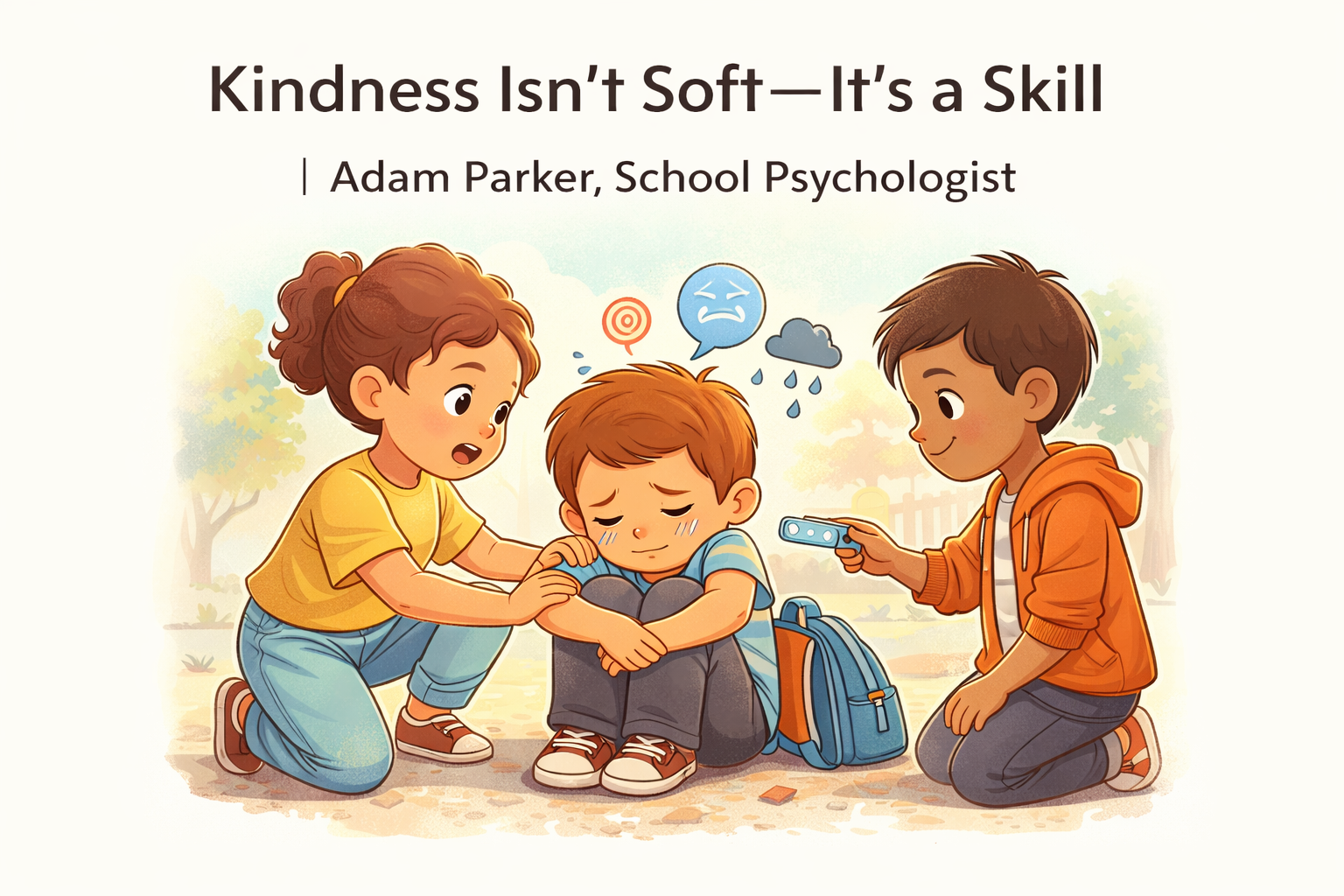
Kindness Isn’t Soft…It’s a Skill
Kindness gets misunderstood.
We talk about it like it’s just being nice.
Sharing.
Smiling.
Saying please and thank you.
But real kindness, the kind that lasts, is not soft.
It’s a skill.
Kindness Requires Regulation
You can’t be kind when you’re dysregulated.
When your body is flooded with stress, fear, or anger, the brain shifts into protection mode.
And protection mode doesn’t think about others, it thinks about survival.
That’s why kids who are struggling emotionally often get labeled as “unkind.”
Not because they don’t care.
But because their nervous system is busy.
Kindness comes after regulation, not before it.
You Can’t Force Kindness
We try though.
“Be nice.”
“Say sorry.”
“That wasn’t kind.”
But forced kindness teaches performance, not empathy.
Kids learn kindness when they experience it.
When someone:
pauses instead of snapping
stays instead of walking away
listens instead of correcting
That’s how the brain learns,
“This is how humans treat each other.”
Kindness Is Built in Small Moments
Kindness isn’t grand gestures.
It’s:
letting someone calm down before talking
inviting someone back into the game
noticing when a friend is quiet
choosing repair over being right
Those skills don’t come naturally to all kids.
They are taught, practiced, and modeled.
The Kindness That Matters Most
The kindness kids remember isn’t always how others treated them.
It’s how they were treated when they struggled.
When they messed up.
When they were loud.
When they were overwhelmed.
When they were not their best selves.
That’s the kindness that sticks.
And that’s the kindness that teaches kids how to be kind to others — and eventually, to themselves.