A Season of Fewer Tabs
A Season of Fewer Tabs
I’m bad at this.
Let’s just start there.
I am not naturally good at slowing down, doing less, or deciding that something is finished. My brain is always quietly… and loudly… asking:
“Okay… but what’s next?”
Even when things are good.
Especially when things are good.
And honestly? I see the same thing happening in schools all the time.
More programs.
More data.
More emails.
More interventions.
More enrichment.
More clubs.
More reminders to “just push through a little longer.”
Somewhere along the way, “doing enough” stopped feeling like enough.
The Tab Problem
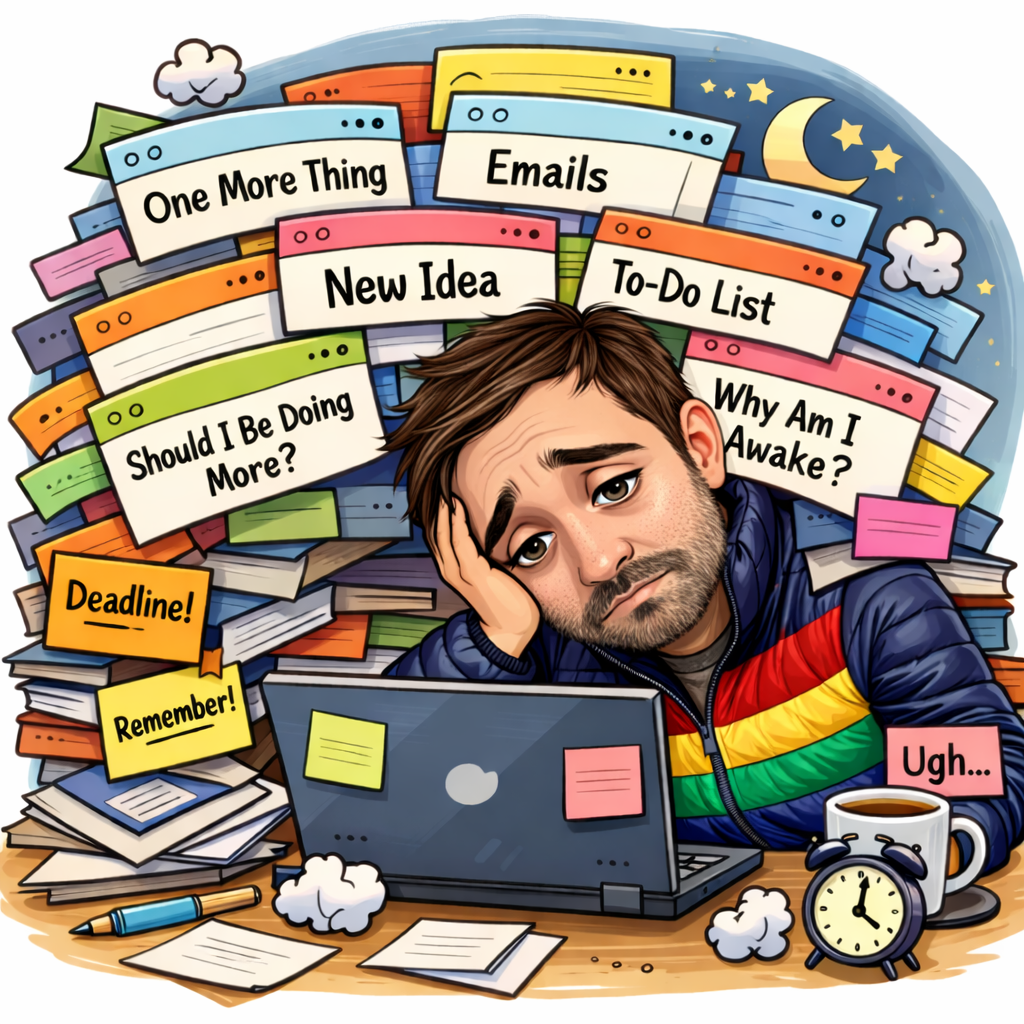
Recently I realized my brain feels like my laptop when I have too many tabs open.
Nothing is technically broken —
but everything is slower.
A little glitchy.
Slightly overheating.
Constantly humming in the background.
That’s what happens when we keep adding… without ever closing.
And here’s the part I don’t love admitting:
I often confuse being busy with being responsible.
If I’m doing more → I must be trying hard.
If I’m tired → it must mean I care.
If I can’t sleep → it’s probably because I haven’t figured it all out yet.
Spoiler: that’s not how sleep works.
What This Does to Sleep
When we don’t give ourselves permission to stop,
our brain never gets the signal that it’s safe to power down.
So at night, instead of rest, we get:
Mental replay
To-do list reruns
Conversations that already happened
Conversations that might happen
A strong urge to solve everything at 11:47 PM
It’s not because we’re bad at sleeping.
It’s because our nervous system still thinks we’re… on.
The Science (Friendly Version)
There’s a reason we stay busy — and it’s not because we love exhaustion.
From a psychological lens:
Being busy gives us predictability
Productivity provides short-term relief
Constant motion keeps us from sitting with discomfort
Our brains are wired to avoid uncertainty.
Stillness removes distraction — which means we suddenly hear the thoughts we’ve been dodging:
Am I doing enough?
What if I disappoint someone?
What if I stop and realize I’m overwhelmed?
What if… I don’t like how this feels?
Busyness becomes a coping strategy —
a socially approved one.
And in schools, this shows up as:
Over-programming
Overscheduling
Adults modeling exhaustion as commitment
Kids learning early that rest is something you earn, not something you need
When Enough Is… Enough
The hard question is never:
“What else should we add?”
The harder one is:
“What could we stop doing and still be okay?”
Or even scarier:
“What if we stopped… and nothing bad happened?”
A season of fewer tabs doesn’t mean giving up.
It means choosing intentionally.
Capacity is not unlimited — for adults or kids.
Sometimes the healthiest move
is closing something gently and saying:
“This is enough for now.”
Homework (Gentle, I Promise)
1️⃣ The Tab Audit
Write down 5 things currently taking up mental space.
Ask:
• Does this still matter?
• Is this mine to carry?
• Could this wait?
Close one tab. Just one.
2️⃣ The “Enough” Sentence
Once a day, finish:
“Today, enough looked like ______.”
No fixing.
No improving.
Just noticing.
3️⃣ The Nighttime Test
If sleep has been hard, ask:
“What am I afraid will happen if I stop thinking about this tonight?”
You don’t have to answer it.
Simply naming it is powerful.
🤍 Final Thought
I don’t have this figured out.
I’m practicing it alongside everyone else.
But I’m learning that:
Rest isn’t laziness
Slowing down isn’t quitting
And fewer tabs doesn’t mean fewer things matter
Sometimes it just means
we’re finally giving our brain — and our body —
permission to breathe.
And honestly?
That feels like enough for now.