

Sunday Scaries: The Beauty of Being Out of Place
I'm writing this week's Sunday Scaries from somewhere a little different. I'm sitting in the mountains of Colombia, surrounded by jungle, listening to birds I've never heard before, watching clouds roll through the valleys and the sun disappear behind the mountains. It's pretty incredible. It's also a reminder of how different the world can feel when we step outside the places and routines we're used to.
There's something interesting about being somewhere unfamiliar. Different languages, different foods, different people, and a completely different way of doing things. It's exciting, but it can also be uncomfortable. And I've been thinking about how much of our growth happens in those moments when we aren't entirely sure what we're doing.
Our brains actually prefer familiarity. Predictability helps us feel safe, and our routines allow us to move through the day without having to think about every little decision. But when we encounter something new, our brains have to adapt. Neuroplasticity, the brain's ability to create and strengthen neural connections, is influenced by new experiences and learning. When we challenge ourselves, we give our brains opportunities to develop new skills, perspectives, and ways of thinking.
There's also an interesting relationship between stress and performance, often described by the Yerkes-Dodson law. A little stress or challenge can help motivate us, sharpen our attention, and encourage learning. Too much stress, however, can overwhelm us and make those things more difficult. The goal isn't to constantly push ourselves into uncomfortable situations, but to find opportunities to stretch ourselves without becoming overwhelmed.
I see this all the time working with kids. Think about a student walking into a new classroom, trying a sport for the first time, or approaching a group of kids on the playground. Those experiences might seem small to an adult, but for a child, they can feel enormous. There's uncertainty, fear of rejection, and the possibility that things won't go as planned. But there's also the possibility of making a new friend, discovering a new interest, or realizing they're capable of something they didn't think they could do.
And I think adults need those reminders just as much as kids do. We get pretty comfortable with our routines and the things we know we're good at. It's easy to avoid situations where we might feel awkward, uncertain, or inexperienced. But if we only stick with what feels comfortable, we might miss out on some pretty incredible experiences.
One of the things I try to remind kids is that two feelings can exist at the same time. You can be scared and brave at the same time. You can feel out of place and still belong. Being nervous about trying something doesn't mean you're not ready to try it. Sometimes courage is simply being willing to give something a chance, even when you're not sure how it's going to turn out.
And growth isn't always about succeeding; sometimes it's simply discovering that you were capable of trying.
So this week, I want to encourage you to find one small opportunity to step outside your comfort zone. Maybe that's talking to someone new, trying a different activity, asking a question, or taking a chance on something you've been putting off. It doesn't have to involve traveling to another country or doing something dramatic. Sometimes all it takes is a few steps across the playground.
Because sometimes the most beautiful things happen when we're willing to feel a little out of place.
Happy Sunday, everyone!
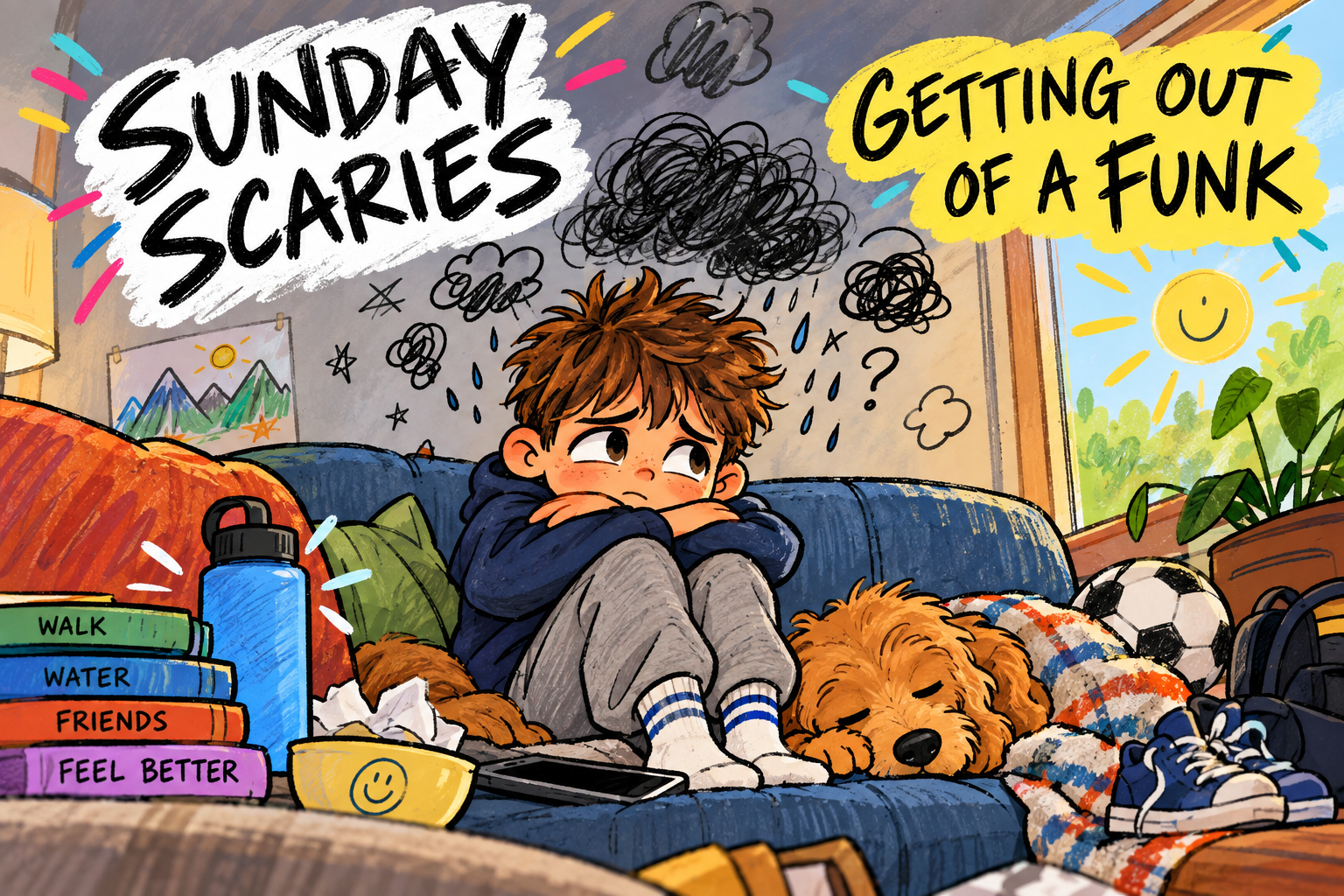
Getting Out of a Funk
I was in a funk the other day. Not like anything huge had happened, and I couldn’t really point to one specific thing that was wrong. I just felt off. I was in my head, kind of down, kind of irritated, and I knew I was there but couldn’t seem to shake it.
I think that’s one of the weird things about funks. Sometimes you know exactly why you’re in one. You had a bad day, something happened with a friend, school is stressful, work is stressful, you didn’t sleep, whatever. Other times it’s just this collection of little things that builds up until suddenly you don’t really feel like yourself.
For me, one of the first things I notice is that I start pulling inward. I think more. I talk less. Things that normally don’t bother me suddenly feel heavier. I can get stuck replaying the same stuff in my head, and even when I know that’s what I’m doing, it doesn’t always mean I can just stop.
So I tried some of the obvious stuff. I went for a walk. I drank some water. I tried getting out of the house and moving around a little bit. All good things, and probably things I needed to do anyway, but I was still kind of in it.
And I actually think that’s important. Sometimes we make coping skills sound like they’re supposed to immediately fix how you feel. Go for a walk and boom, better. Take some deep breaths and now everything is fine. That’s not really how it works. Sometimes the walk helps 5%. Sometimes drinking some water helps 2%. Sometimes you do all the healthy stuff and still feel crummy for a while.
Later, one of my older mentors stopped by. She could tell I wasn’t quite myself and said some really kind things to me. Nothing dramatic. She didn’t solve anything. She just knew me well enough to remind me of some things I probably needed to hear at that moment. Then I got a really great hug from her daughter, which definitely didn’t hurt.
That was probably the first time all day I felt myself come out of it a little bit.
I think there are two parts to getting out of a funk. The first is noticing that you’re in one. That sounds obvious, but it really isn’t. Sometimes you’ve been quieter, more annoyed, more tired, less interested in things, or spending way more time in your own head for a few days before you even realize what’s happening.
The second part is not expecting one thing to magically fix it. Maybe you need movement. Maybe you need food or sleep or water. Maybe you need to get off your phone. Maybe you need to do something you normally enjoy even if you don’t really feel like doing it. And sometimes you need another person.
That last one is probably the hardest because when I’m in a funk, reaching out is usually not the thing I want to do. I want to disappear into my own head and figure it out myself. But sometimes another person can see us a little more clearly than we can see ourselves in that moment.
So if you’re in a funk this week, maybe don’t make the goal “feel amazing.” Just notice it. Try one thing. Then another thing. Go for the walk. Drink the water. Get some sleep. Talk to somebody. Let someone be nice to you. Take the hug.
You don’t have to solve everything at once. Sometimes you just need to find the first little thing that helps you start feeling like yourself again.
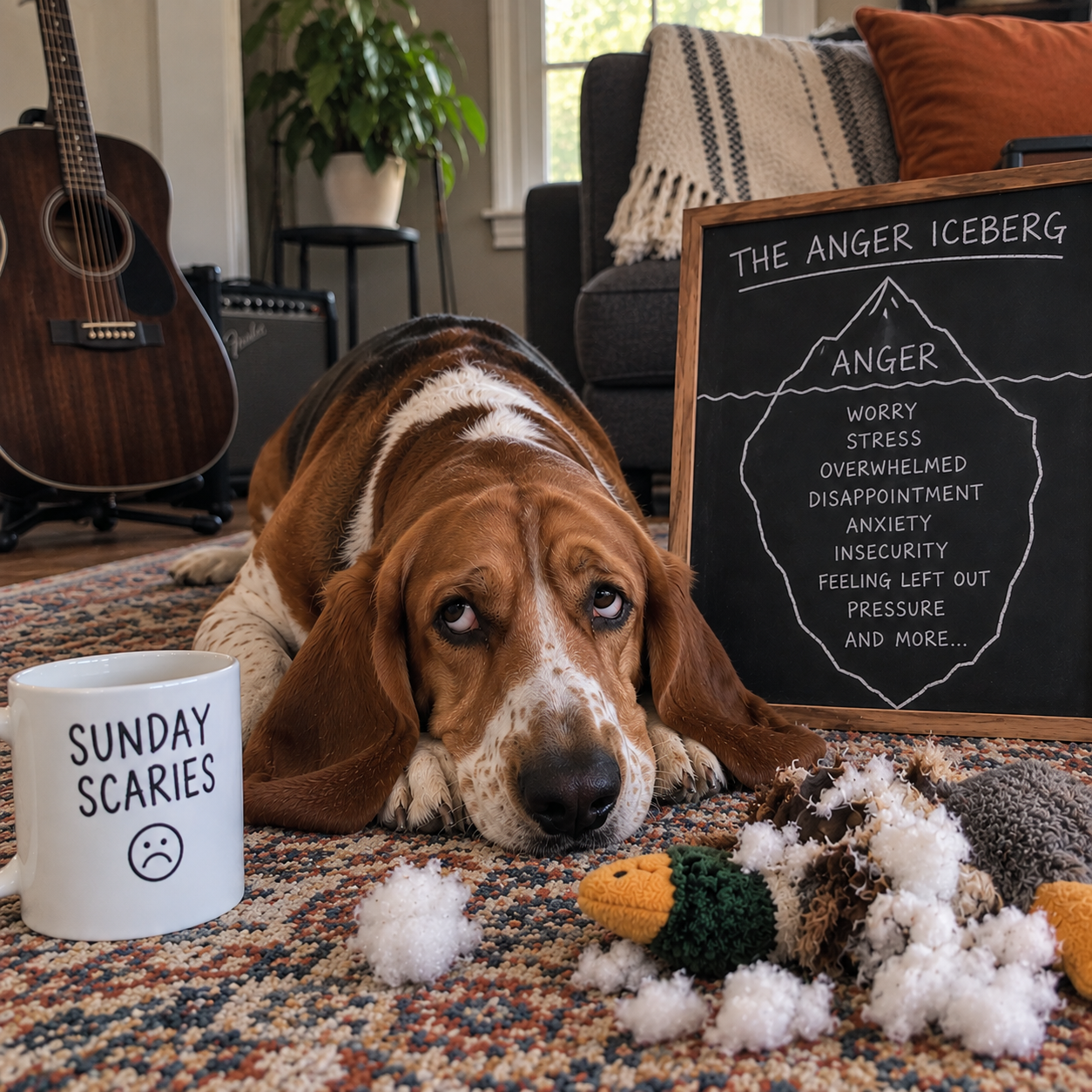
What’s Underneath the Anger?
For the last few weeks at school, I’ve been teaching fifth graders about anger. We started with anger thermometers, then talked about body clues, and this week we moved into anger icebergs: the idea that anger is often the part everyone sees, while underneath it might be worry, embarrassment, disappointment, sadness, fear, or feeling overwhelmed.
One student shared a great example. They talked about getting really mad at a sibling one morning because the sibling kept asking them for something while they were trying to get ready for school. At first, it sounded pretty simple: My sibling was annoying me, so I got mad.
But when we started looking underneath the iceberg, there was a lot more going on. They were worried about being late. They were thinking about what was happening at school that day. They felt rushed. And then there were all the other little worries that come with being an elementary school kid: friends, teachers, assignments, recess, fitting in, remembering everything you’re supposed to remember.
The sibling just happened to ask for something when the thermometer was already at about a seven.
There’s actually a reason anger can work like this. Anger can serve a protective function. When our brain perceives a threat, frustration, unfairness, or loss of control, our body prepares us to do something about it. Our heart rate can increase, our muscles tense, and our attention narrows toward whatever seems to be the problem. Anger gives us energy to act.
That can be incredibly useful. It’s also why the person asking you a completely innocent question at the wrong time can suddenly feel like Public Enemy No. 1.
And that’s why we spent time learning body clues before we ever got to the iceberg. Our bodies can tell us the temperature is rising before we understand what’s underneath it. Maybe your jaw tightens. Maybe your stomach feels weird. Maybe you start talking faster or louder. Maybe you get really quiet. Learning your own clues gives you a chance to catch yourself before the anger takes over the whole story.
The goal isn’t to get rid of anger. Anger is normal, and sometimes it’s telling us something important. The goal is to get a little better at understanding what it’s trying to protect.
So, homework for this week: the next time you notice yourself getting irritated, check your thermometer. Notice what your body is doing. Then take a look underneath the iceberg and ask yourself: What else am I feeling right now? What was happening before I got angry?
Maybe you really are just mad.
But maybe your sibling, partner, coworker, friend, or random person driving 12 miles under the speed limit—is just standing in front of something much bigger.
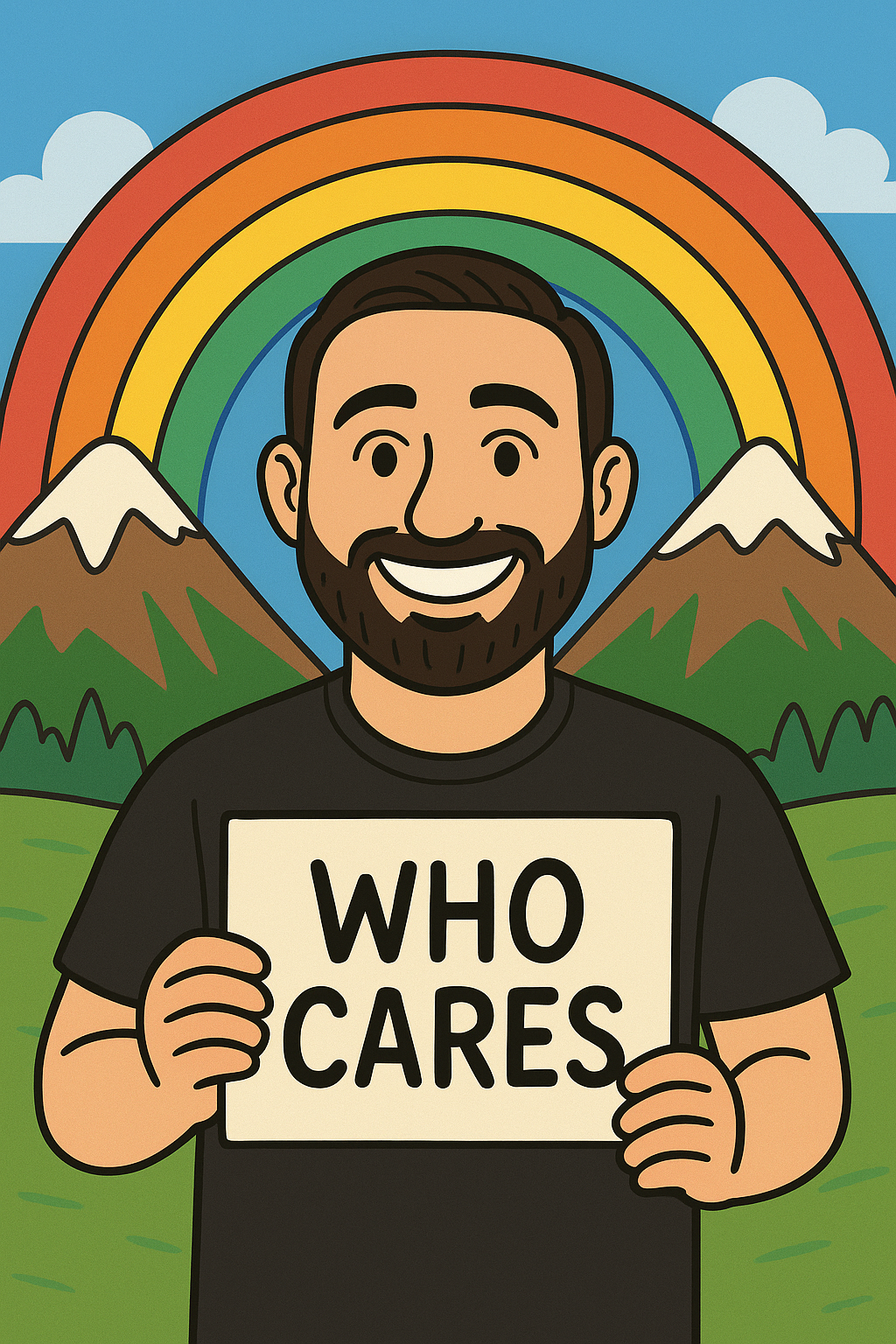
Who Cares? (In the Kindest Way Possible)
The other night after a show, a woman in the crowd shared something quietly and honestly.
She said she wished she could sing or dance in front of people—but she was too afraid of being judged.
Not “I can’t.”… “I’m scared.”
That stuck with me.
Because that fear isn’t really about singing or dancing. It’s about being seen. It’s about worrying what other people might think if we show a piece of ourselves that isn’t polished, practiced, or approved.
And it brought me back to a moment years ago when I was making art alongside a well-established artist. Her work was confident, effortless, clearly shaped by years of experience. Mine felt small in comparison.
I remember staring at my piece and thinking, Why am I even doing this?
I wanted to throw it away before anyone noticed it.
She looked at me, then at my work, and said something I’ve carried with me ever since:
“Art is for you.
This is how you see butterflies.
And that’s what matters.”
We weren’t making “good” butterflies.
We were making our butterflies.
And that’s when it clicked.
Who cares?
Not in a dismissive way.
Not in a “nothing matters” way.
But in a gentle way.
A way that says:
We’re all just working our way through life the best we can.
What “Who Cares” Really Means
When I say who cares, I don’t mean:
Stop trying
Be reckless
Nothing matters anyway
I mean:
You don’t have to carry imagined judgment
You don’t need universal approval
You’re allowed to exist imperfectly
Most of us aren’t afraid of failing.
We’re afraid of being evaluated while we try.
But here’s the truth we forget:
Everyone else is doing the same thing…figuring it out as they go, hiding their own doubts, hoping they’re “doing it right.”
Who cares if your art isn’t the best in the room?
Who cares if your voice shakes?
Who cares if your version looks different?
Not because it’s meaningless…but because it’s human.
The Science of Fear (and Why It Feels So Loud)
Fear isn’t a personal flaw. It’s biology.
Your brain’s alarm system—the amygdala—exists to keep you safe. The problem is that it reacts to social threat the same way it reacts to physical danger.
Judgment, embarrassment, rejection?
Your nervous system reads those as risk.
So when you think about:
singing
dancing
creating
sharing
Your body reacts before your logic catches up.
Fear says: “Don’t do this.”
Not because it’s dangerous,but because it’s unfamiliar.
And your brain would rather keep you comfortable than help you grow.
A Softer Way to Move Through Fear
Instead of trying to “beat” fear, try walking with it.
1. Shrink the moment
You don’t have to perform.
Create where no one else is watching.
Fear learns through experience,not pressure.
2. Name what you’re actually afraid of
Often it’s not the act itself.
It’s:
being judged
being compared
being misunderstood
Naming fear turns it from a monster into information.
3. Ask the real question
Not “Is this good?”
But “Is this mine?”
That’s where freedom lives.
4. Practice “who cares” on purpose
When the critical voice shows up, try responding with:
“Maybe. And I’ll be okay anyway.”
That’s not giving up.
That’s letting go.
The Homework (Low Pressure, High Permission)
This week, do one small thing just for you.
Sing.
Draw.
Dance.
Write.
Create.
No fixing. No sharing. No improving.
Afterward, ask yourself:
What was I worried would happen?
What actually happened?
Did the fear pass?
How did my body feel afterward?
Let the answer matter more than the outcome.
Because life isn’t about doing it perfectly.
It’s about doing it honestly.
And maybe the kindest thing we can remind ourselves is this:
Who cares?
We’re all just doing our best—
and that’s what’s important.