
Sunday Scaries: The Beauty of Being Out of Place
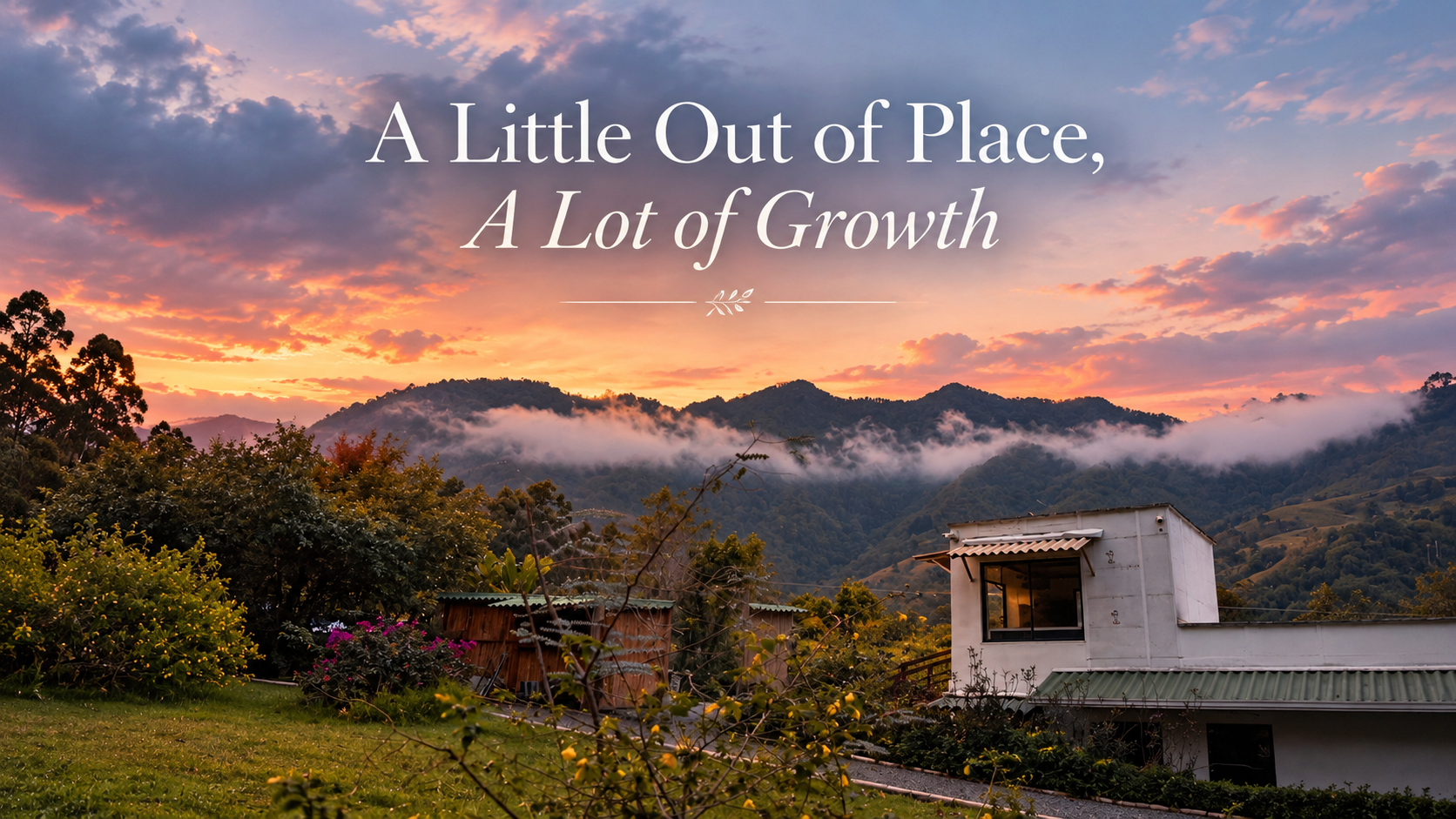
I'm writing this week's Sunday Scaries from somewhere a little different. I'm sitting in the mountains of Colombia, surrounded by jungle, listening to birds I've never heard before, watching clouds roll through the valleys and the sun disappear behind the mountains. It's pretty incredible. It's also a reminder of how different the world can feel when we step outside the places and routines we're used to.
There's something interesting about being somewhere unfamiliar. Different languages, different foods, different people, and a completely different way of doing things. It's exciting, but it can also be uncomfortable. And I've been thinking about how much of our growth happens in those moments when we aren't entirely sure what we're doing.
Our brains actually prefer familiarity. Predictability helps us feel safe, and our routines allow us to move through the day without having to think about every little decision. But when we encounter something new, our brains have to adapt. Neuroplasticity, the brain's ability to create and strengthen neural connections, is influenced by new experiences and learning. When we challenge ourselves, we give our brains opportunities to develop new skills, perspectives, and ways of thinking.
There's also an interesting relationship between stress and performance, often described by the Yerkes-Dodson law. A little stress or challenge can help motivate us, sharpen our attention, and encourage learning. Too much stress, however, can overwhelm us and make those things more difficult. The goal isn't to constantly push ourselves into uncomfortable situations, but to find opportunities to stretch ourselves without becoming overwhelmed.
I see this all the time working with kids. Think about a student walking into a new classroom, trying a sport for the first time, or approaching a group of kids on the playground. Those experiences might seem small to an adult, but for a child, they can feel enormous. There's uncertainty, fear of rejection, and the possibility that things won't go as planned. But there's also the possibility of making a new friend, discovering a new interest, or realizing they're capable of something they didn't think they could do.
And I think adults need those reminders just as much as kids do. We get pretty comfortable with our routines and the things we know we're good at. It's easy to avoid situations where we might feel awkward, uncertain, or inexperienced. But if we only stick with what feels comfortable, we might miss out on some pretty incredible experiences.
One of the things I try to remind kids is that two feelings can exist at the same time. You can be scared and brave at the same time. You can feel out of place and still belong. Being nervous about trying something doesn't mean you're not ready to try it. Sometimes courage is simply being willing to give something a chance, even when you're not sure how it's going to turn out.
And growth isn't always about succeeding; sometimes it's simply discovering that you were capable of trying.
So this week, I want to encourage you to find one small opportunity to step outside your comfort zone. Maybe that's talking to someone new, trying a different activity, asking a question, or taking a chance on something you've been putting off. It doesn't have to involve traveling to another country or doing something dramatic. Sometimes all it takes is a few steps across the playground.
Because sometimes the most beautiful things happen when we're willing to feel a little out of place.
Happy Sunday, everyone!
Isn’t getting older grand?
A child I work with recently told me they’re scared to get older.
They talked about bigger expectations. More responsibility. Harder days.
They worried that something important might disappear—that being older would mean less fun, less safety, less magic.
It wasn’t dramatic. It was honest.
And sitting there with them, I realized how often we talk about getting older like it’s something to brace for instead of something to step into.
We warn kids about it.
We joke about it as adults.
We measure it in losses more than gains.
But the truth is, getting older isn’t just about what gets heavier.
It’s also about what gets wider.
What We’re Afraid Of When We Think About Getting Older
The fear makes sense.
Getting older does come with more responsibility.
More decisions.
More moments where no one swoops in to fix things for you.
For kids, that can feel like the end of something precious.
For adults, it can feel like a narrowing—fewer options, fewer chances, fewer firsts.
We don’t lie when we acknowledge that weight.
But we miss something important when we stop there.
What Actually Grows With Age
What we don’t talk about enough is how much capacity grows as we age.
You gain skills you couldn’t have accessed earlier:
Emotional regulation
Perspective
Knowing when to push and when to rest
Knowing what matters and what doesn’t deserve your energy
These skills don’t arrive all at once.
They stack quietly, year after year, often unnoticed until you need them.
You also gain new freedoms:
Choosing your people
Choosing your pace
Choosing how much you explain
Choosing what you no longer carry
Getting older doesn’t mean you lose agency.
It often means you finally get to use it.
Three Generations, One Moment
This all hit me in the same week I was talking with that child.
I’m getting another year older next week.
Not in a dramatic way—just one of those birthdays that sneaks up on you.
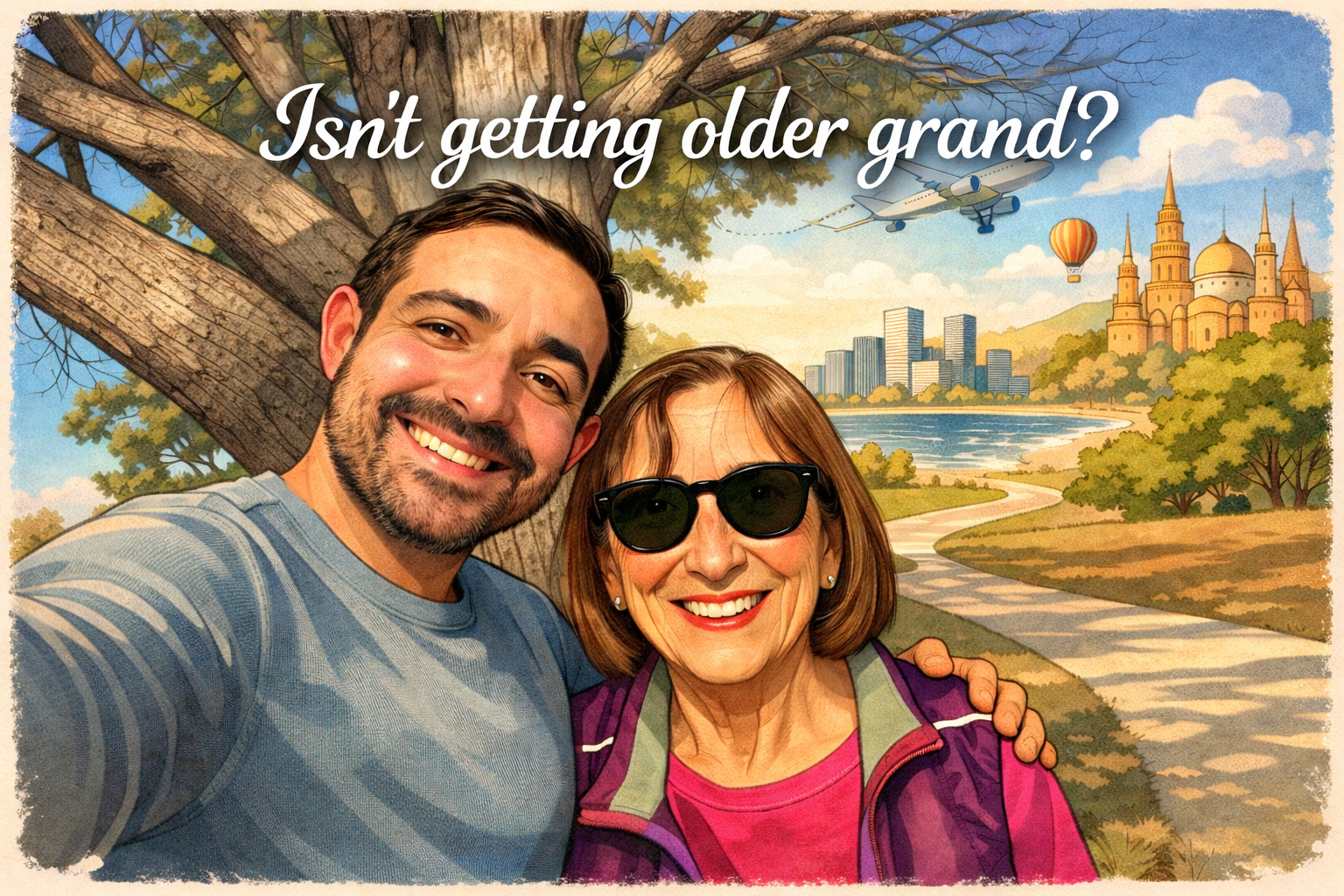
At the same time, I’m planning a summer trip with my 78-year-old mom.
We’re traveling to foreign countries together—new streets, new languages, unfamiliar places.
Watching her plan that trip is a quiet reminder of something powerful:
getting older doesn’t mean you stop exploring.
It often means you explore with more confidence, more curiosity, and fewer apologies.
In one week, I’m holding:
A child afraid of growing up
My own reflection on aging
And a parent who is still expanding her world
That doesn’t feel like decline.
It feels like continuity.
A Better Way to Think About “Older”
Getting older doesn’t mean the door closes.
It means the map gets bigger.
Each year adds tools you didn’t have before.
Each year gives you more choice about how you move through the world.
Yes, the stakes change.
Yes, responsibility increases.
But so does your ability to meet what’s in front of you.
What I Told the Child (and What I Tell Myself)
I didn’t tell my client not to be scared.
I told them that every year comes with new tools they don’t have yet—and that they won’t be alone when those years arrive.
And I think that’s the part worth holding onto.
The excitement of getting older isn’t loud.
It doesn’t announce itself.
It shows up quietly—in new skills, new freedoms, and the growing realization that you’re more capable than you once were.
That doesn’t mean life gets easier.
It means you get stronger at living it.
And honestly?
That’s something to look forward to.
Who Cares? (In the Kindest Way Possible)
The other night after a show, a woman in the crowd shared something quietly and honestly.
She said she wished she could sing or dance in front of people—but she was too afraid of being judged.
Not “I can’t.”… “I’m scared.”
That stuck with me.
Because that fear isn’t really about singing or dancing. It’s about being seen. It’s about worrying what other people might think if we show a piece of ourselves that isn’t polished, practiced, or approved.
And it brought me back to a moment years ago when I was making art alongside a well-established artist. Her work was confident, effortless, clearly shaped by years of experience. Mine felt small in comparison.
I remember staring at my piece and thinking, Why am I even doing this?
I wanted to throw it away before anyone noticed it.
She looked at me, then at my work, and said something I’ve carried with me ever since:
“Art is for you.
This is how you see butterflies.
And that’s what matters.”
We weren’t making “good” butterflies.
We were making our butterflies.
And that’s when it clicked.
Who cares?
Not in a dismissive way.
Not in a “nothing matters” way.
But in a gentle way.
A way that says:
We’re all just working our way through life the best we can.
What “Who Cares” Really Means
When I say who cares, I don’t mean:
Stop trying
Be reckless
Nothing matters anyway
I mean:
You don’t have to carry imagined judgment
You don’t need universal approval
You’re allowed to exist imperfectly
Most of us aren’t afraid of failing.
We’re afraid of being evaluated while we try.
But here’s the truth we forget:
Everyone else is doing the same thing…figuring it out as they go, hiding their own doubts, hoping they’re “doing it right.”
Who cares if your art isn’t the best in the room?
Who cares if your voice shakes?
Who cares if your version looks different?
Not because it’s meaningless…but because it’s human.
The Science of Fear (and Why It Feels So Loud)
Fear isn’t a personal flaw. It’s biology.
Your brain’s alarm system—the amygdala—exists to keep you safe. The problem is that it reacts to social threat the same way it reacts to physical danger.
Judgment, embarrassment, rejection?
Your nervous system reads those as risk.
So when you think about:
singing
dancing
creating
sharing
Your body reacts before your logic catches up.
Fear says: “Don’t do this.”
Not because it’s dangerous,but because it’s unfamiliar.
And your brain would rather keep you comfortable than help you grow.
A Softer Way to Move Through Fear
Instead of trying to “beat” fear, try walking with it.
1. Shrink the moment
You don’t have to perform.
Create where no one else is watching.
Fear learns through experience,not pressure.
2. Name what you’re actually afraid of
Often it’s not the act itself.
It’s:
being judged
being compared
being misunderstood
Naming fear turns it from a monster into information.
3. Ask the real question
Not “Is this good?”
But “Is this mine?”
That’s where freedom lives.
4. Practice “who cares” on purpose
When the critical voice shows up, try responding with:
“Maybe. And I’ll be okay anyway.”
That’s not giving up.
That’s letting go.
The Homework (Low Pressure, High Permission)
This week, do one small thing just for you.
Sing.
Draw.
Dance.
Write.
Create.
No fixing. No sharing. No improving.
Afterward, ask yourself:
What was I worried would happen?
What actually happened?
Did the fear pass?
How did my body feel afterward?
Let the answer matter more than the outcome.
Because life isn’t about doing it perfectly.
It’s about doing it honestly.
And maybe the kindest thing we can remind ourselves is this:
Who cares?
We’re all just doing our best—
and that’s what’s important.
The Kindness That Kids Teach Us
There is something about December in an elementary school that feels electric. The hallways buzz a little louder. The artwork gets brighter. The mornings move faster. Everyone is tired and excited at the same time. The adults feel it. The kids feel it even more.
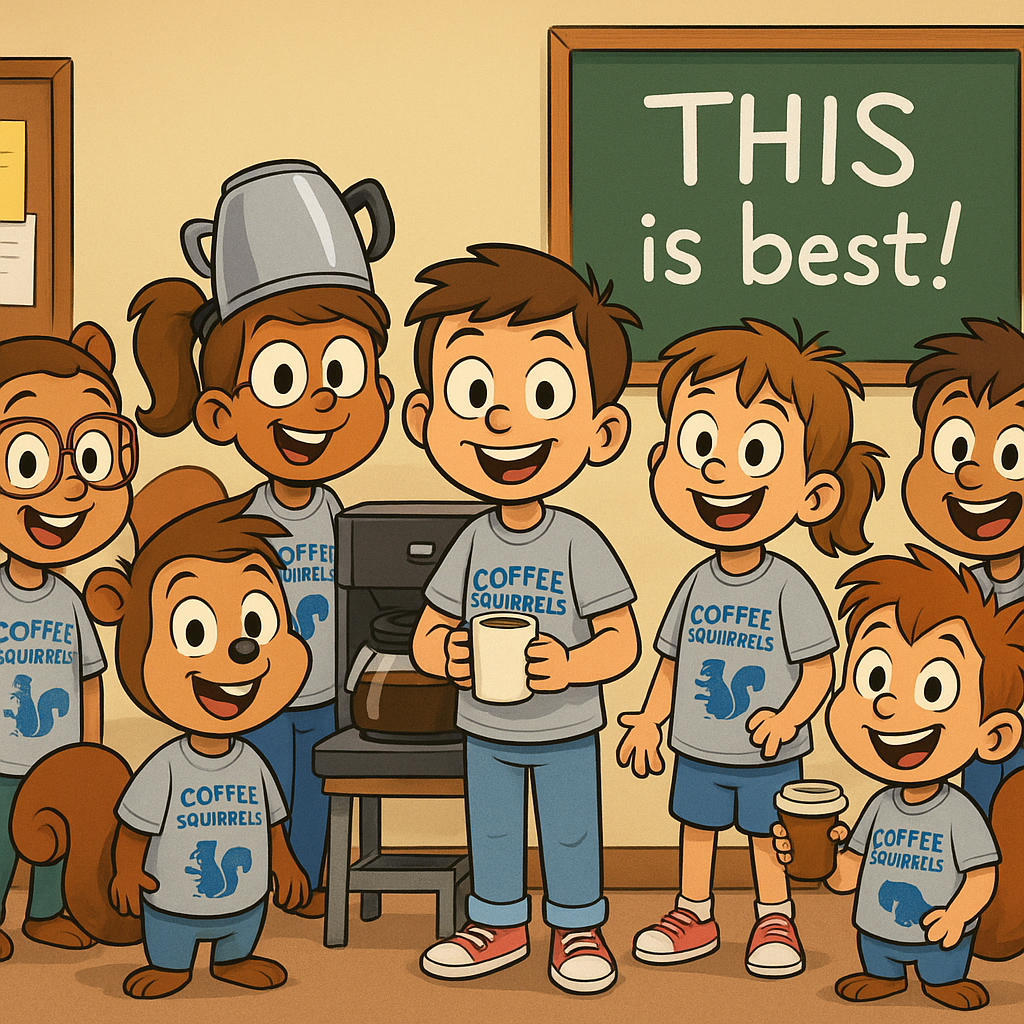
But every Wednesday morning, just when the week feels like it is sliding into the usual holiday chaos, the coffee cart rolls in and everything shifts.
They burst through the door with these huge smiles. Some of them sprint. Some walk in like they are clocking in for the best job of their lives. They grab aprons. They fix their hair. They ask who gets to push which cart. They practice their greetings. And they are so proud. So excited. So ready to make someone’s day, even if they do not fully understand how much they make mine.
It is honestly one of the sweetest things I get to witness all week.
And I forget sometimes. I forget that not every adult gets to see pure kindness in action. I forget that the joy these kids bring is not promised. I forget that their excitement to serve a cup of coffee to a teacher or hand over hot chocolate to a guest teacher is something rare. I forget that their enthusiasm is a kindness all its own.
Kids do not overcomplicate kindness. They do not plan it. They do not schedule it. They feel it and they offer it freely.
And it is not random. There is science behind why kids are so good at this.
The Science of Why Kids Are So Kind
Children are wired for prosocial behavior. Research from developmental psychology shows that even toddlers will help someone pick up dropped items or comfort someone who looks upset. Their brains are still developing the systems that support empathy, emotional regulation, and perspective-taking, but the instinct to connect is already there.
In fact:
Kids notice emotions more than adults.
Studies show that children track facial expressions, tone of voice, and emotional cues closely because they are learning how the world works through relationships. This makes them naturally tuned toward others.
Helping releases reward chemicals in a child’s brain.
Kindness activates dopamine and endorphins, which is why kids often get excited to help. The coffee cart is not just a routine. It is a weekly hit of positive reinforcement that shapes their identity as helpers.
Social modeling is powerful in schools.
Children watch adults and peers closely. When they see teachers thank them, smile at them, or show appreciation, it wires kindness as a normal part of community life. They learn that helping feels good and that they belong.
Predictable routines make kindness easier.
A simple Wednesday ritual gives kids a safe platform to practice prosocial behavior every week. They learn greetings. They learn turn-taking. They learn how it feels to brighten someone’s morning.
What feels like a small moment to us is actually building neural pathways for empathy, confidence, and connection.
The Reminder I Needed
I think about how often I take these moments for granted. How I walk into Wednesdays thinking about the meetings I have, the emails I need to answer, the reports I need to write. Then these kids show up. They look me right in the eye with complete presence and no hesitation. They are excited about a morning routine that many adults would sleepwalk through. They remind me to wake up to my own life.
Kindness is their first language. Connection is the second. They pour those things into every cup they hand out. No one trains them to care like this. They just do.
The holidays can be overwhelming for a lot of kids and adults. There is a lot to manage. A lot to feel. A lot to navigate. But the coffee cart reminds me of a truth I tend to forget. Kids do not need us to create magic for them. They already carry magic with them. All we have to do is notice it.
This time of year, when everything speeds up, the kids slow me down in the best way. They bring me back to kindness. They bring me back to presence. They bring me back to the simple joy of being part of a community that tries each day to make things better for each other.
And as we head into the rest of December, their excitement is the thing I am holding on to. It is the reminder I needed. The gentle one I probably would have missed if I had not stopped long enough to see it.
Kids teach kindness without ever trying. We just have to pay attention.